Guides
Evidence-based strategies from Masterful Learning. Master the science of effective learning.




No matches. Try fewer words or switch filter.
Choosing a study tool?
Compare options and decide whether Unisium fits your math or physics study bottleneck.
What Is Unisium? A Principle-Based Study System for Math and Physics
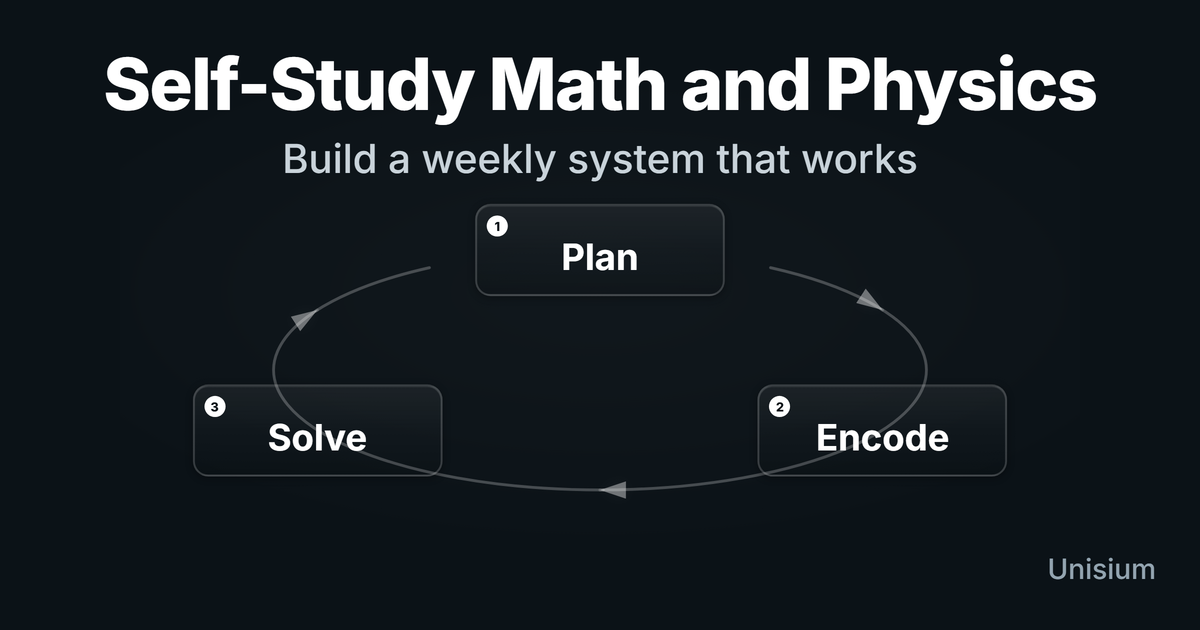
Unisium is a principle-based study system for math and physics students who need better recall, principle selection, problem solving, and exam transfer.
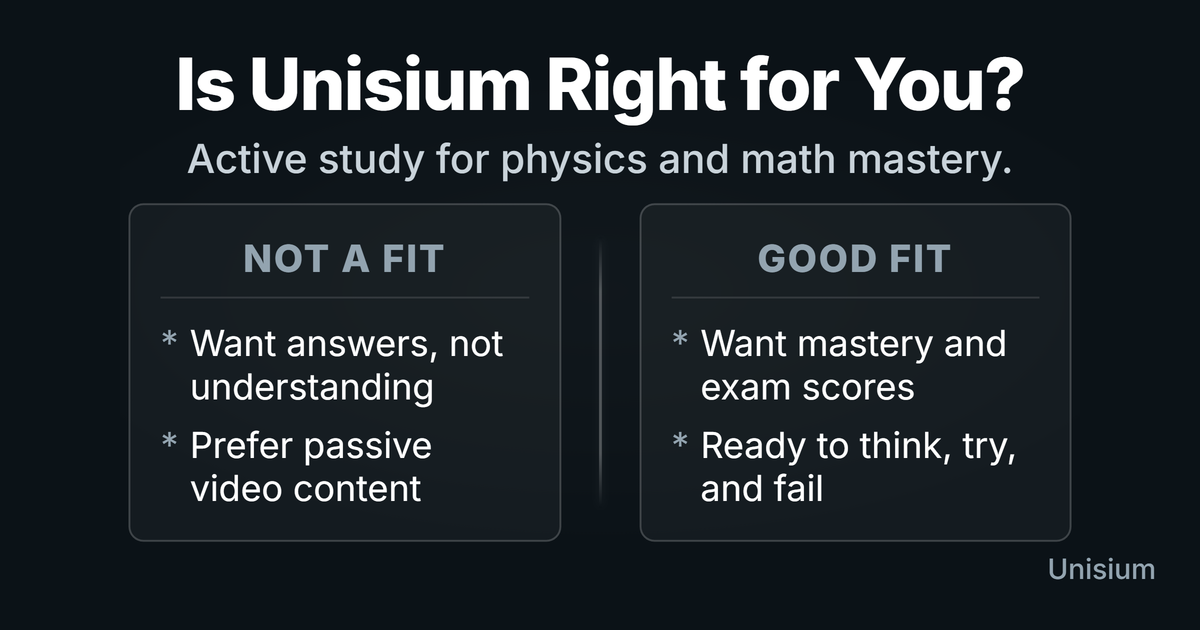
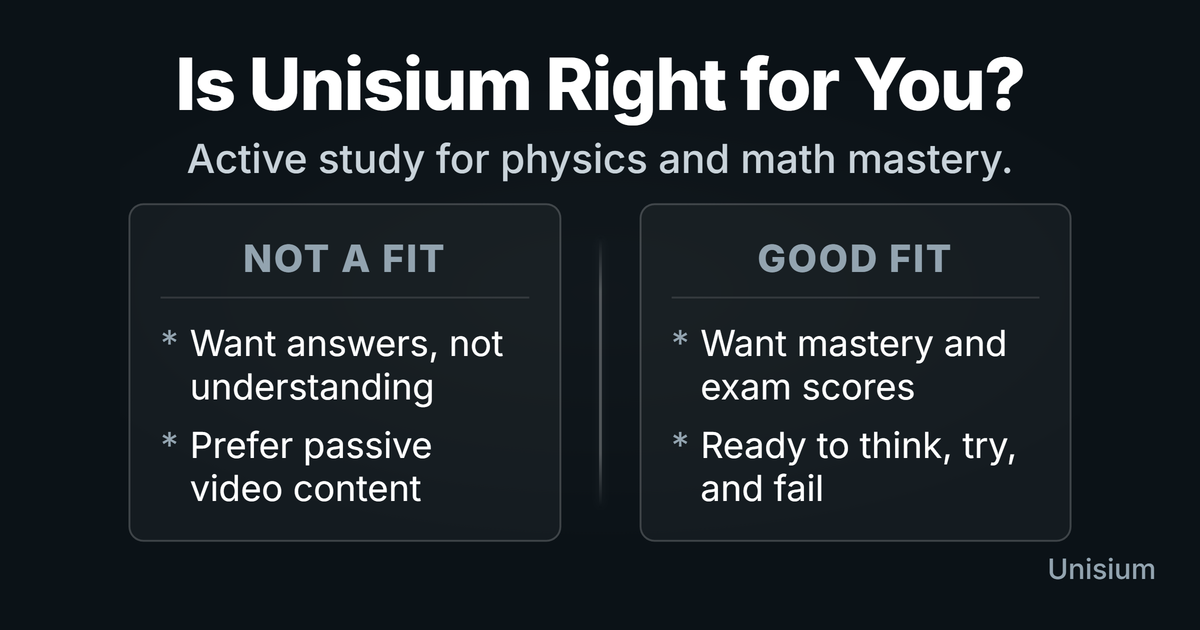
Is Unisium Right for You?
Unisium is not a homework solver or video library. It’s for students who want to master physics and math, perform on exams, and are willing to think, try, fail, and improve.
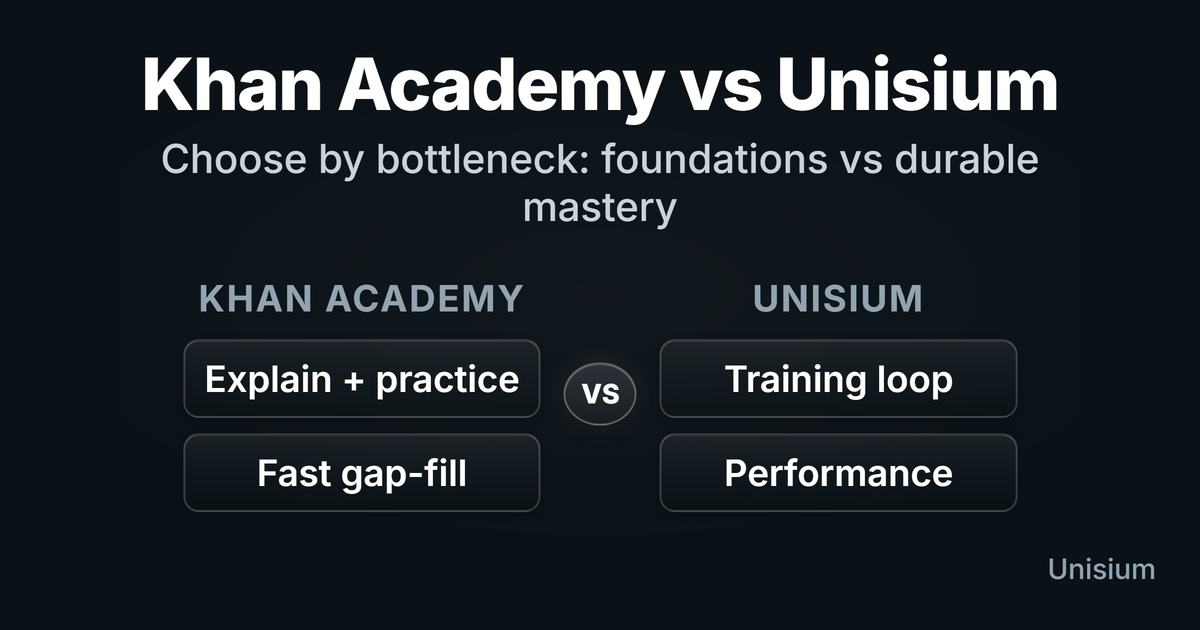
Best Physics Learning Apps for Mastery and Exam Performance
Best physics learning apps for mastering principles, improving exam performance, and solving new, complex problems without wasted effort.
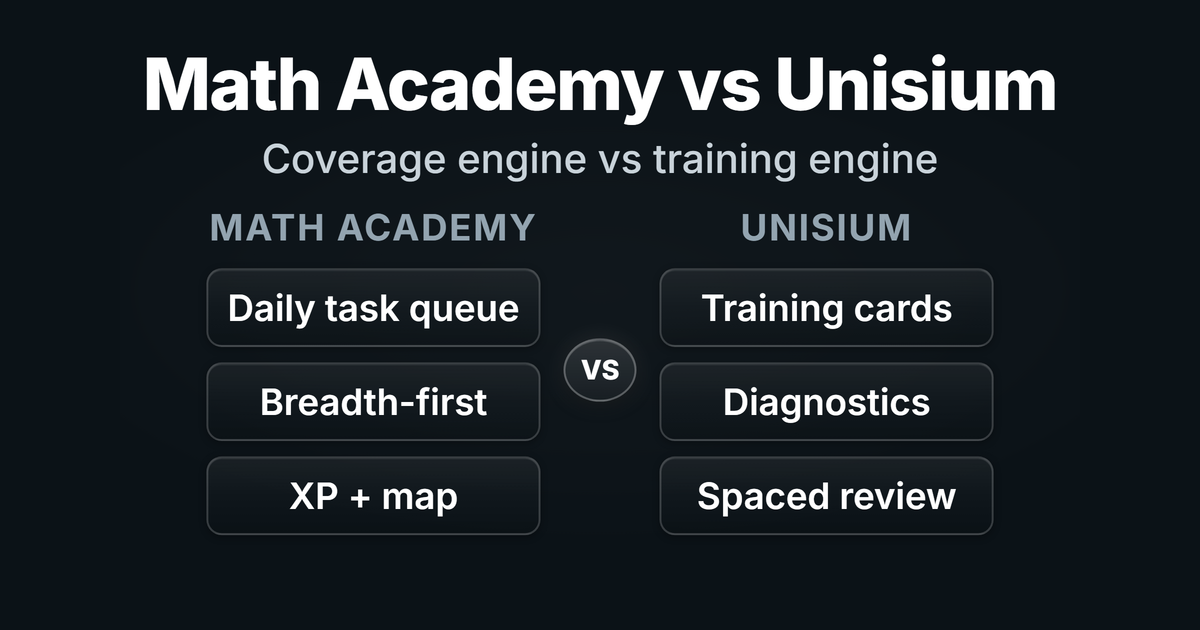
Best Calculus Study App for Mastery and Exams
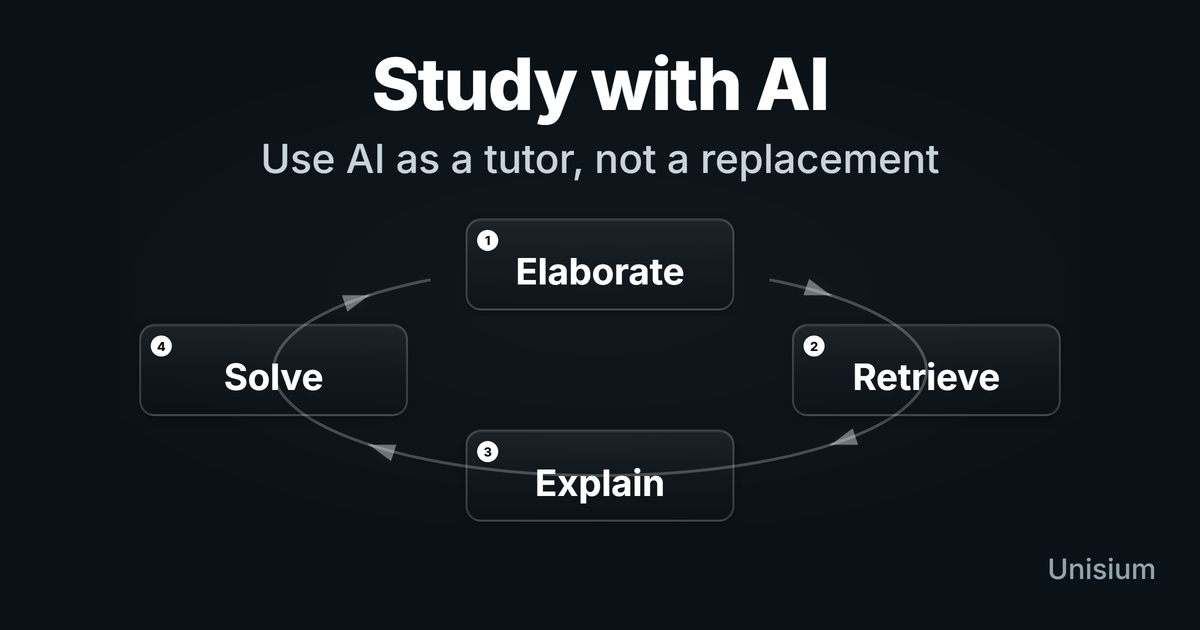
Most calculus apps help with explanations, answer checking, or isolated practice. The best app for mastering calculus should train retrieval practice, elaborative encoding, self-explanation, and problem solving.
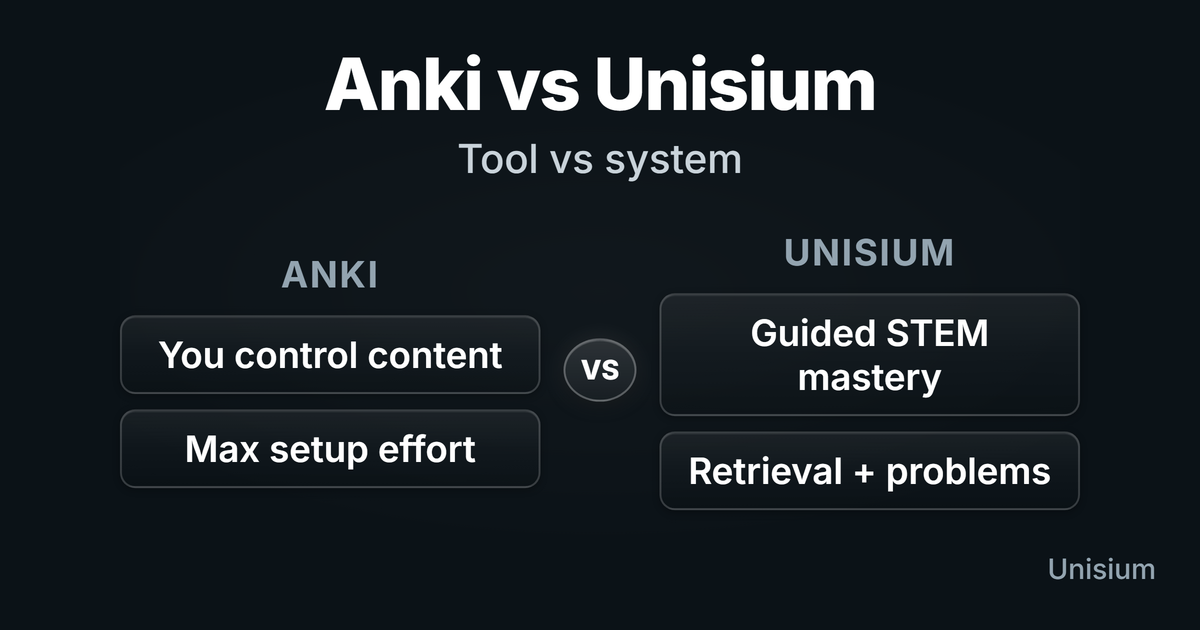
Unisium vs Anki: Active Mastery System vs Spaced-Repetition Flashcards
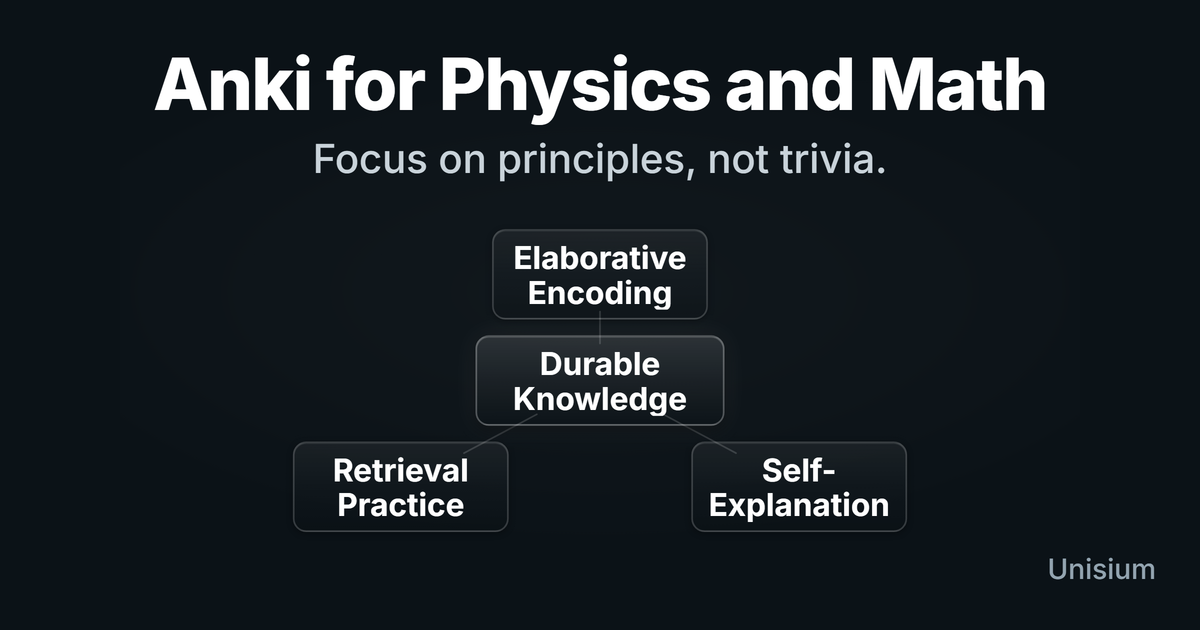
Anki is useful for flexible flashcard review and scheduled recall. Unisium helps math and physics students build usable skill through retrieval practice, elaborative encoding, self-explanation, and problem solving.
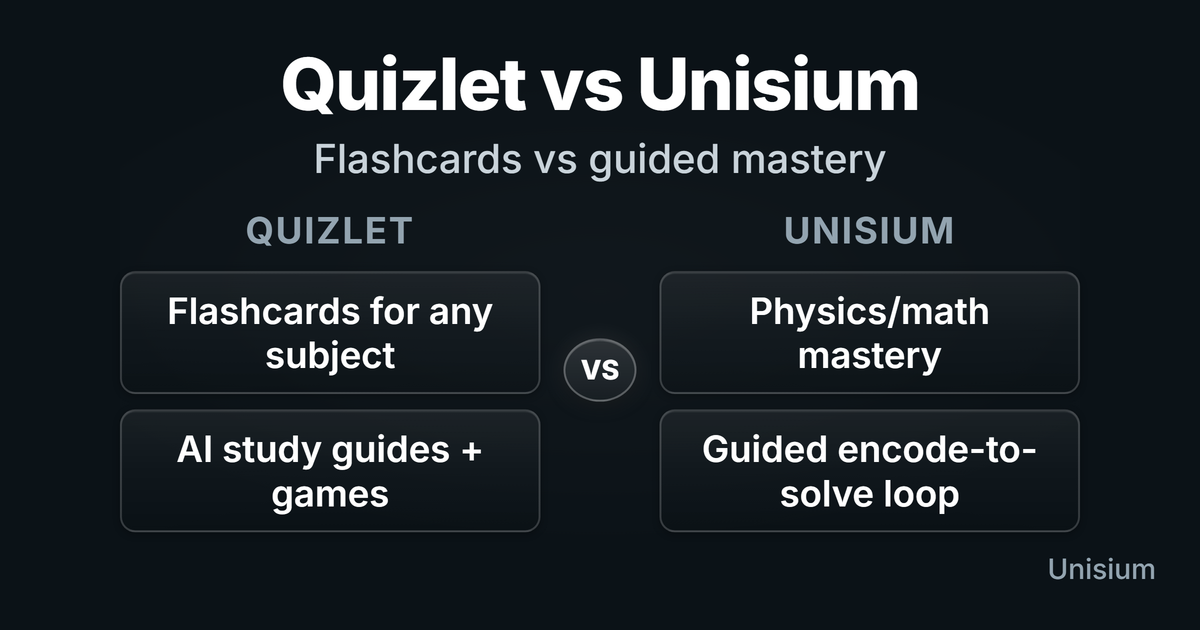
Unisium vs Quizlet: Active Mastery System vs Flashcard Study Tool
Quizlet is useful for flashcards, terms, definitions, and quick recall. Unisium helps math and physics students build usable skill through retrieval practice, elaborative encoding, self-explanation, and problem solving.
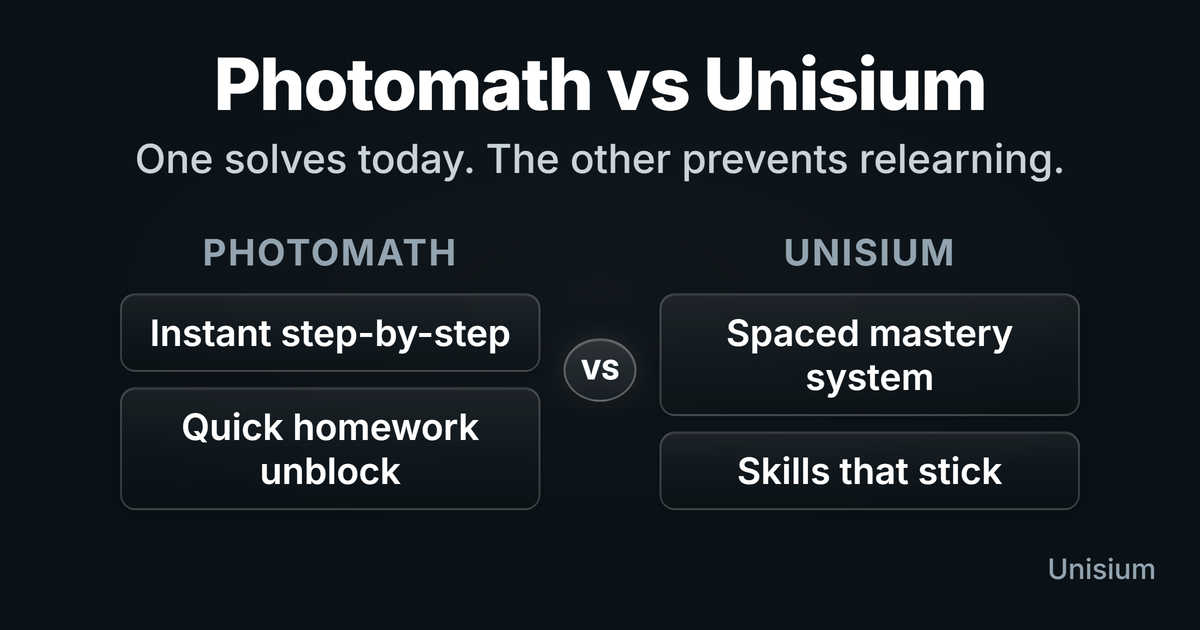
Unisium vs Photomath: Active Mastery System vs Step-by-Step Solver
Photomath can show steps and help check answers. Unisium helps students build usable math and physics skill through retrieval practice, elaborative encoding, self-explanation, and problem solving.
The Core Four
The foundational strategies that form the backbone of effective learning.
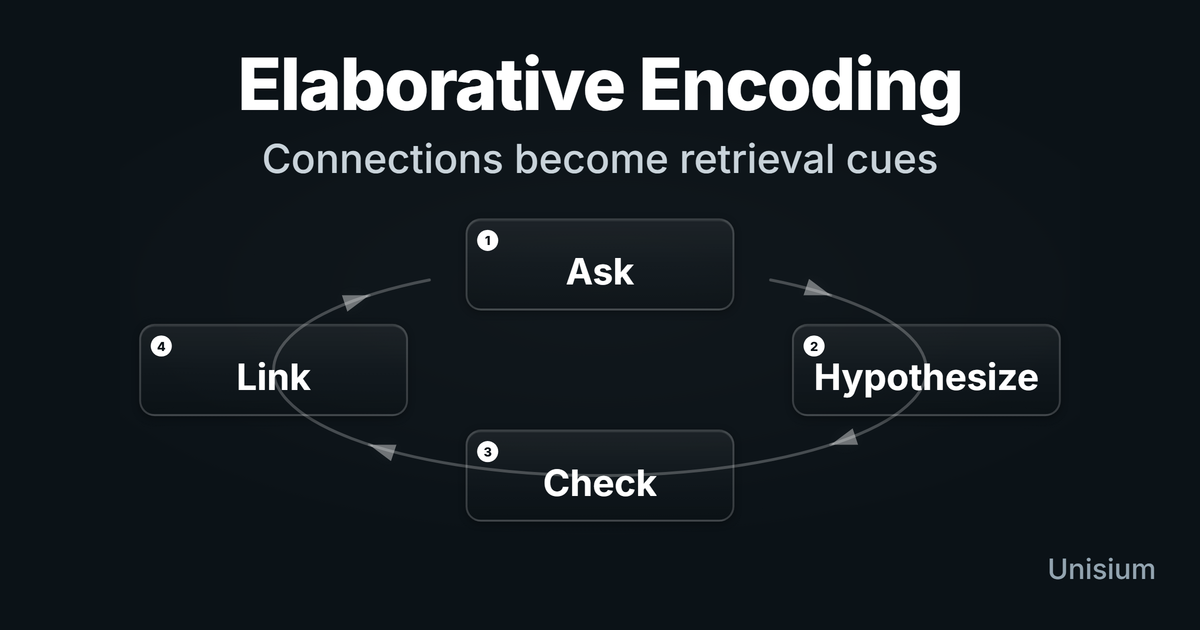
Elaborative Encoding: Learn Faster with Better Connections
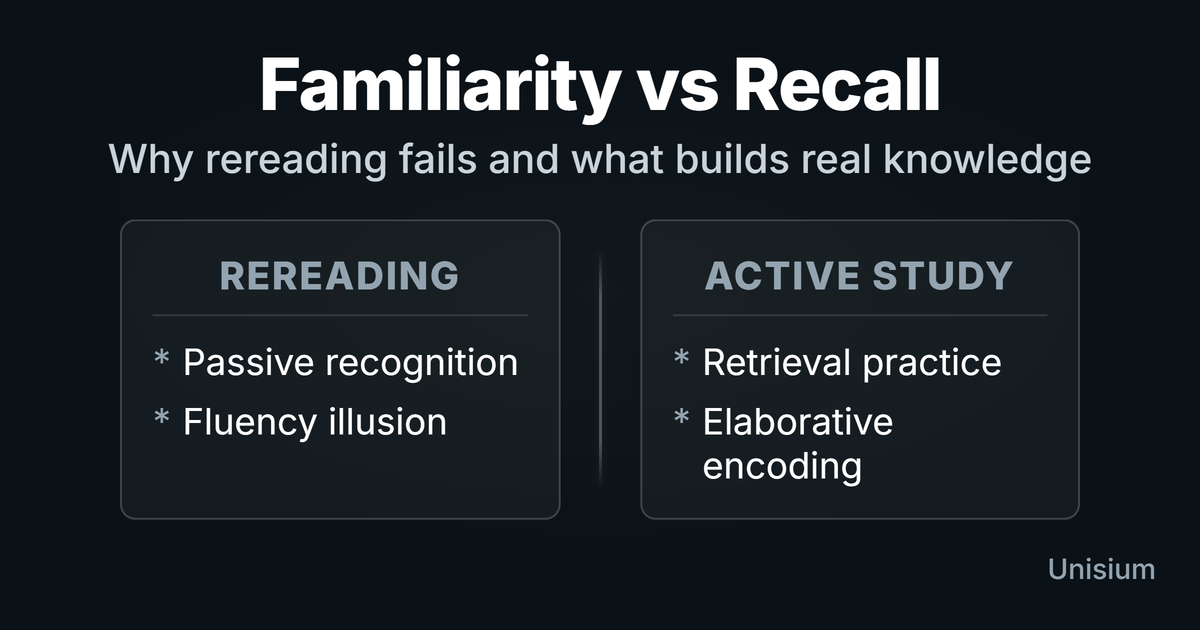
Elaborative encoding turns raw input into usable knowledge by linking new ideas to meaning, conditions, contrasts, and examples. It is especially useful in math and physics when concepts feel familiar but cannot be explained or applied.
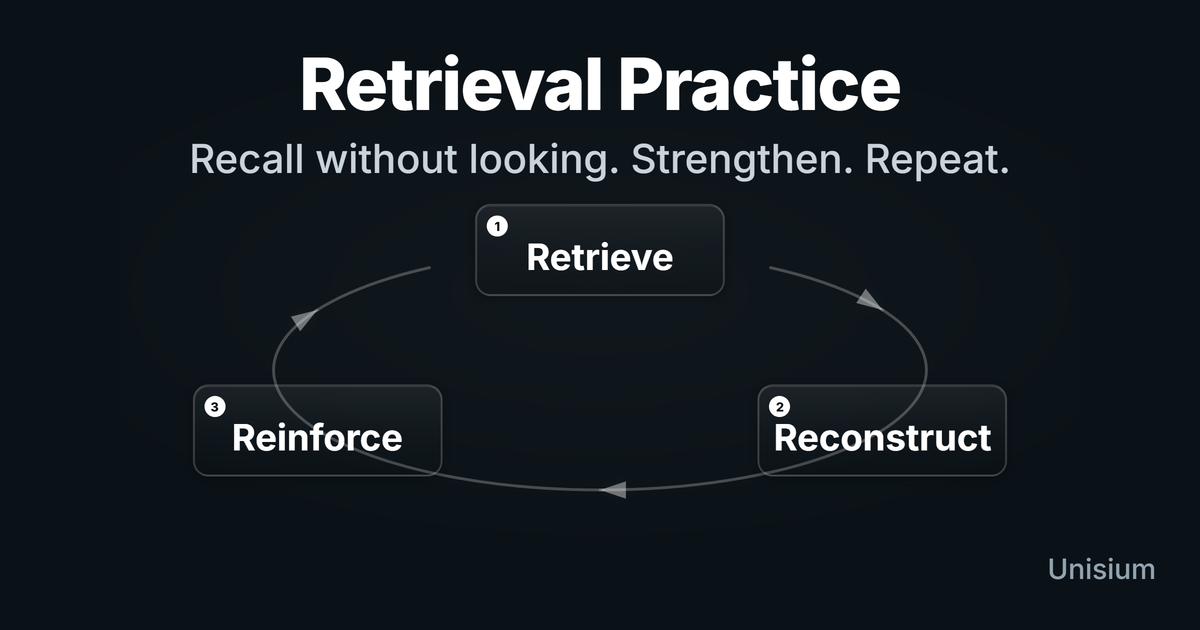
Math and Physics Retrieval Practice: Stop Forgetting Equations and When They Apply
Math and physics retrieval practice helps you stop forgetting equations, conditions, and when ideas apply. Recall before review, space the work, and make knowledge available under pressure.
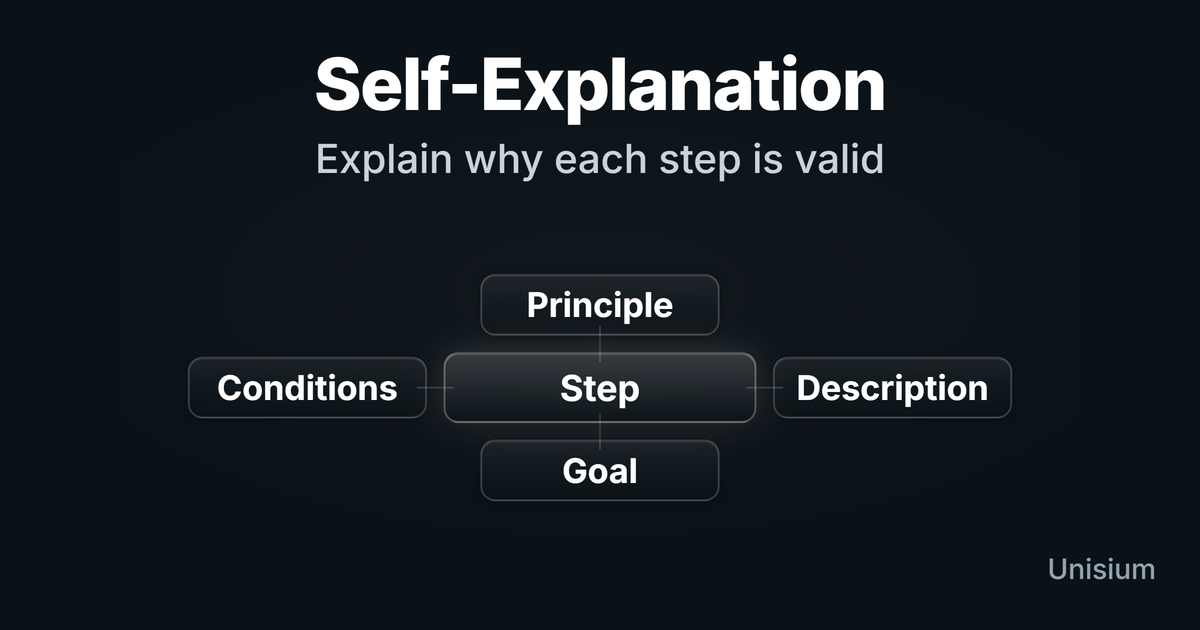
Self-Explanation in Math and Physics: Learn from Worked Examples
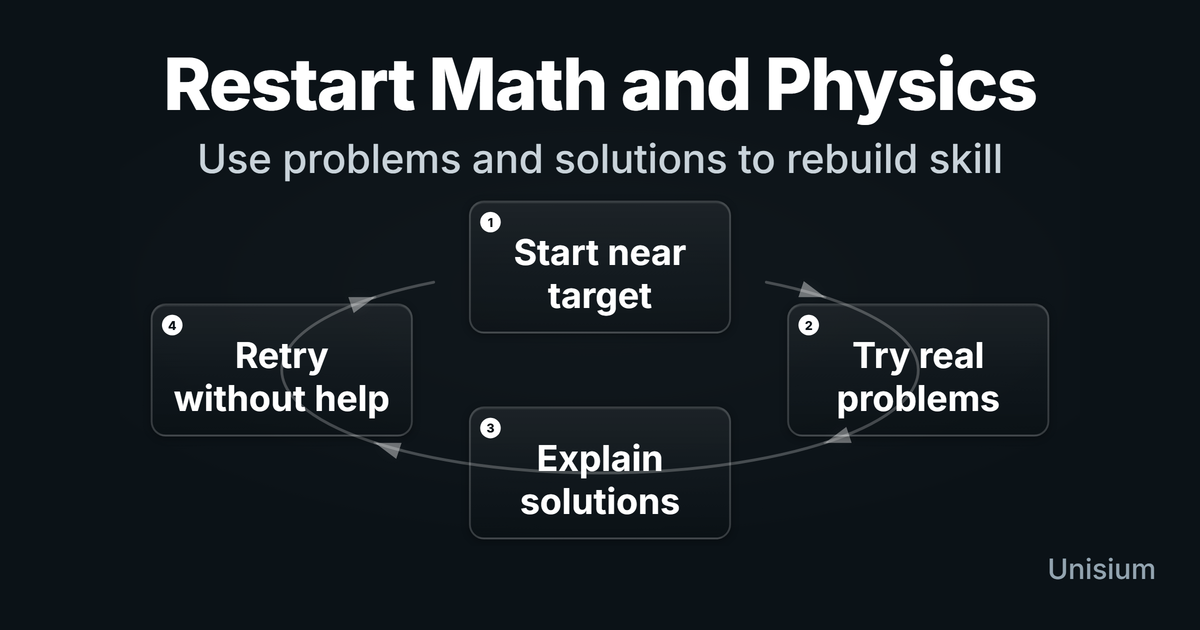
Self-explanation is a study method for learning the hidden reasoning behind worked solutions, so you can solve new math and physics problems on your own.
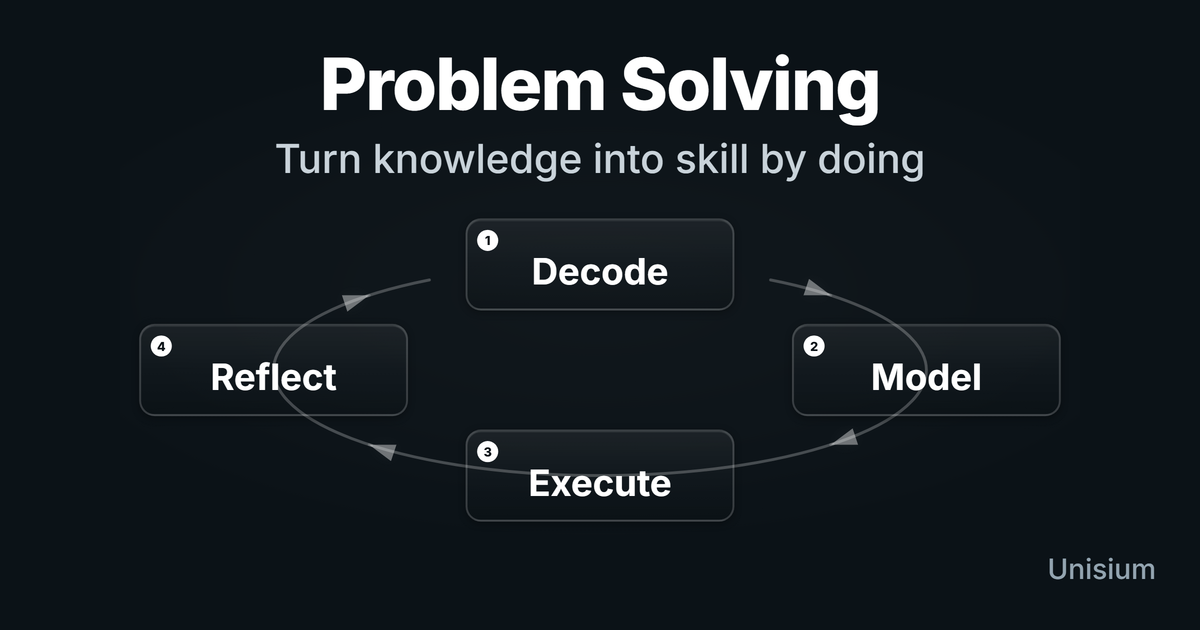
Problem Solving in Math and Physics: From Knowledge to Skill
Problem solving in math and physics turns knowledge into skill by using unfamiliar problems to test principles, build models, and refine solution rules.
More Strategies
Expand your learning toolkit with these additional evidence-based techniques.
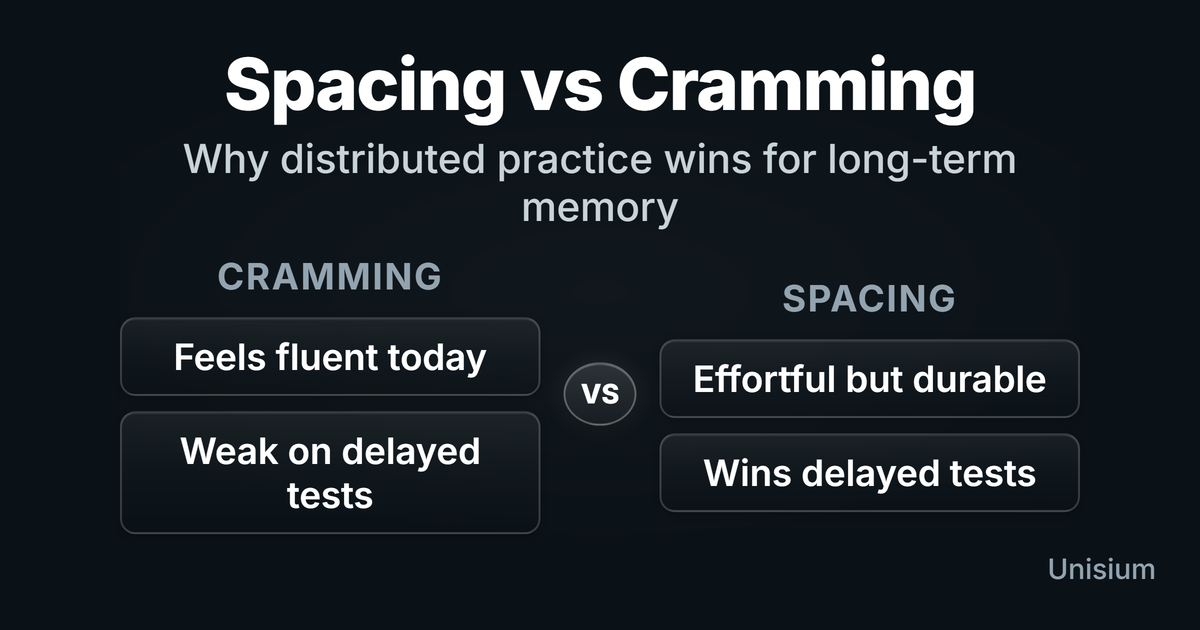
Spacing vs Cramming: Why Distributed Practice Wins (and Exactly How to Do It)
Stop cramming. Spaced learning builds durable memory, better transfer, and calmer exams. Learn why spacing works—and the exact schedules to use.
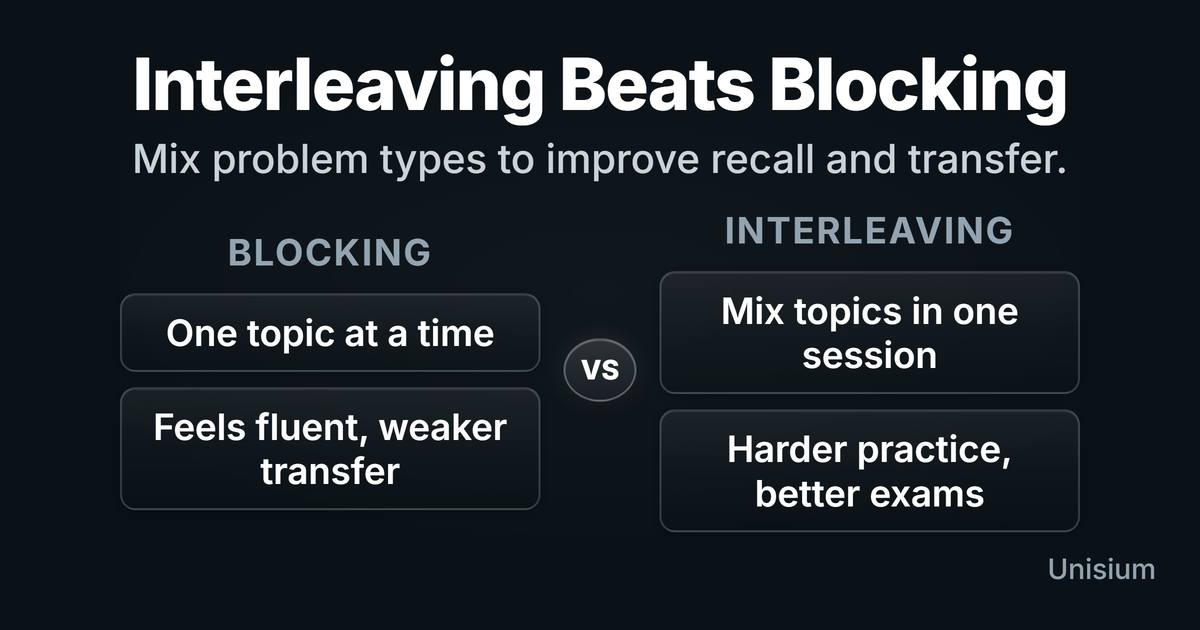
How to Interleave Your Studying for Better Recall, Transfer, and Test Scores
Interleaving beats blocking. Learn what interleaving is, why it works, and exactly how to mix topics and problem types to maximize long-term learning.
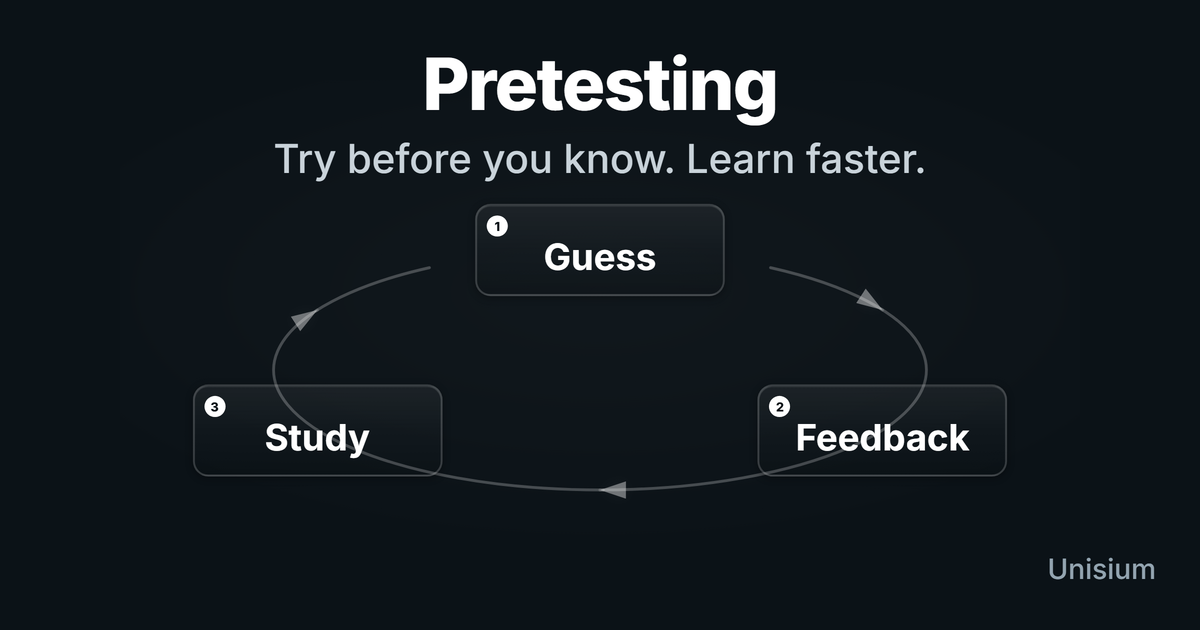
Pretesting: Try Before You Know (and Learn Faster)
Pretesting means trying before you are shown the answer, taught the method, or sure what to do. Make a brief cold attempt from your current knowledge before reading, watching, or checking a solution so the attempt itself prepares later learning.
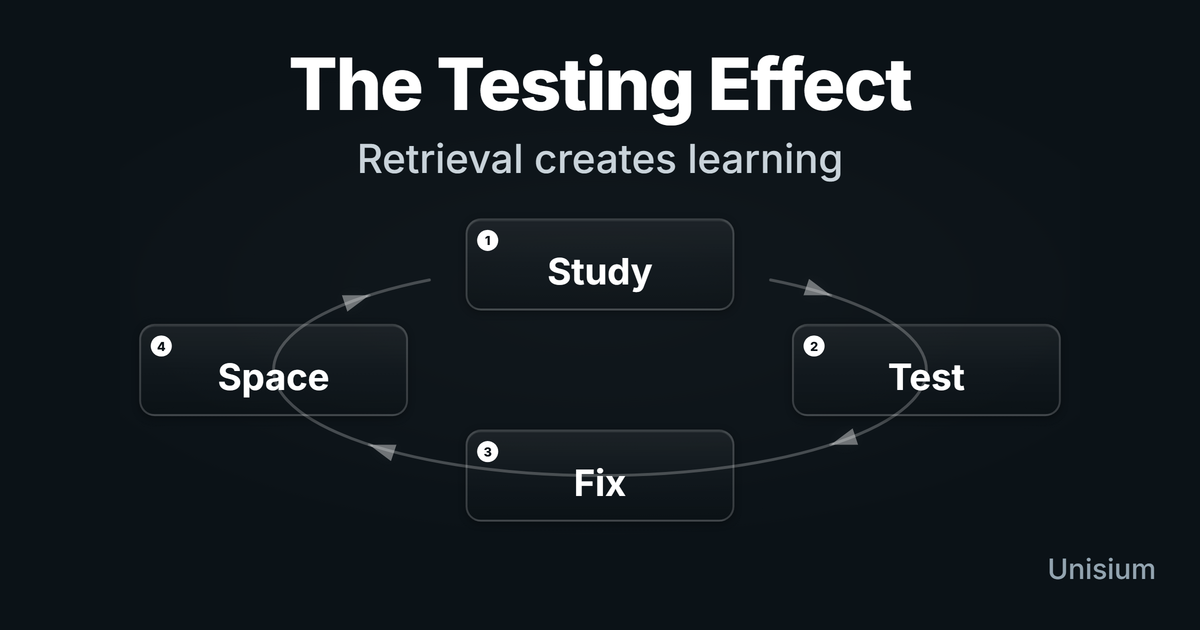
The Testing Effect: How to Supercharge Your Learning by Testing Yourself
Testing yourself isn't just measuring learning—it creates it. Use posttesting + spacing to lock in knowledge and move it to long-term memory.
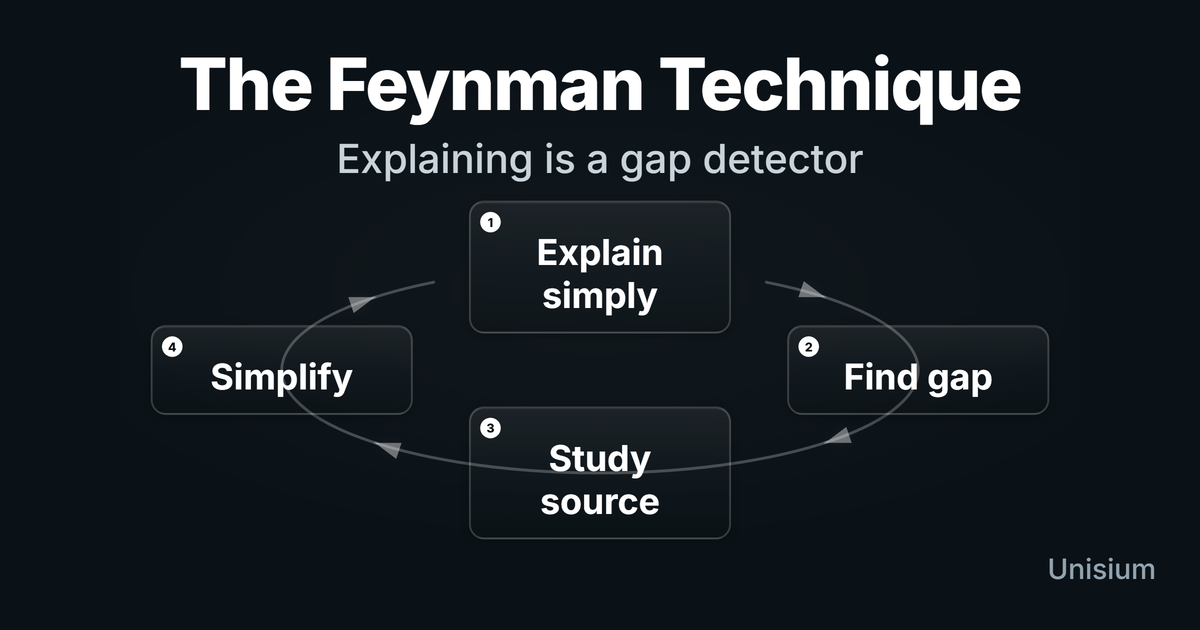
The Feynman Technique: A Gateway to Deep Understanding
Is the Feynman Technique effective? Yes: it forces self-explanation + retrieval, exposing gaps. Use it to simplify tough physics and math concepts for exams.
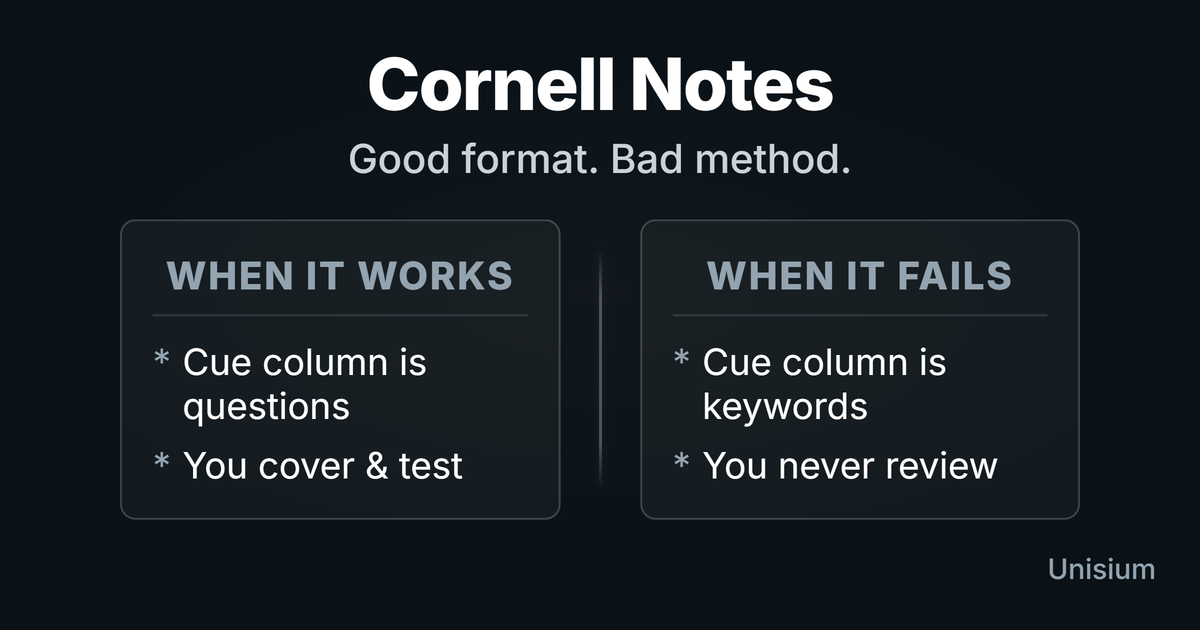
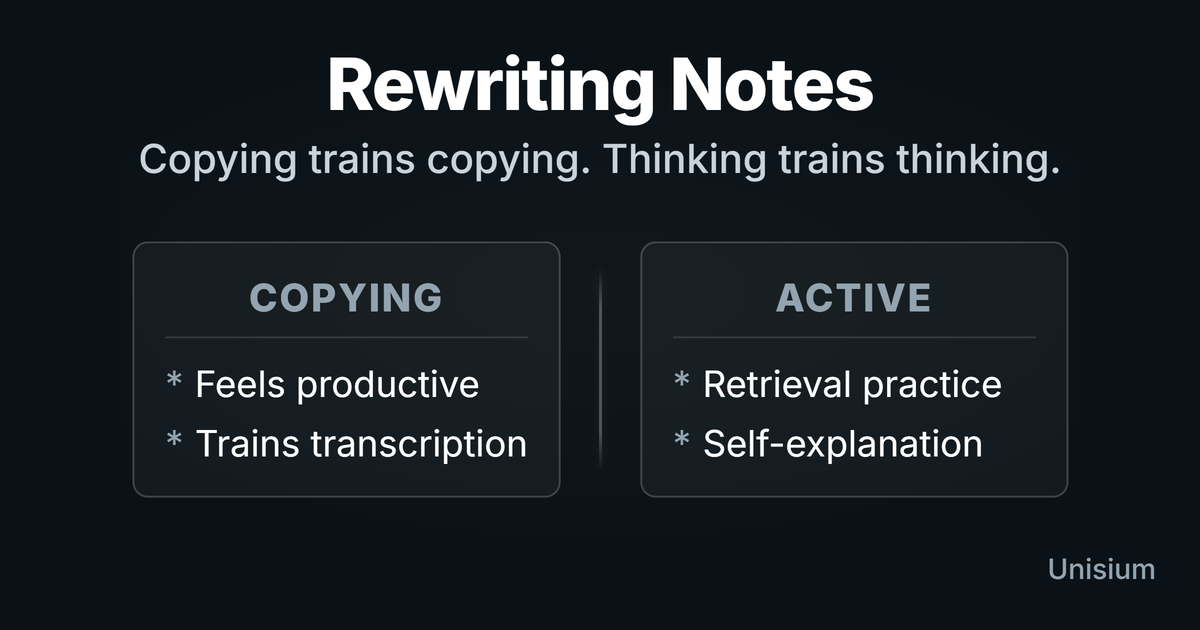
Cornell Notes: Better Than Transcription, But Not Enough
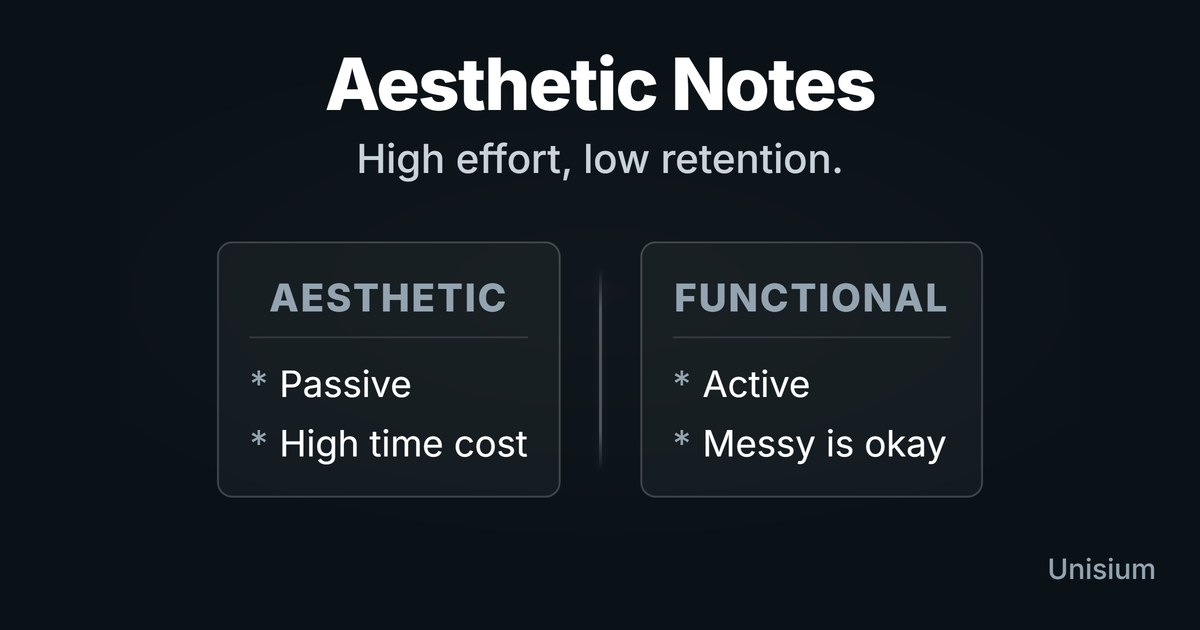
Are Cornell Notes effective? Better than standard notes, but still passive unless you use the cue column for retrieval and the summary for elaboration.
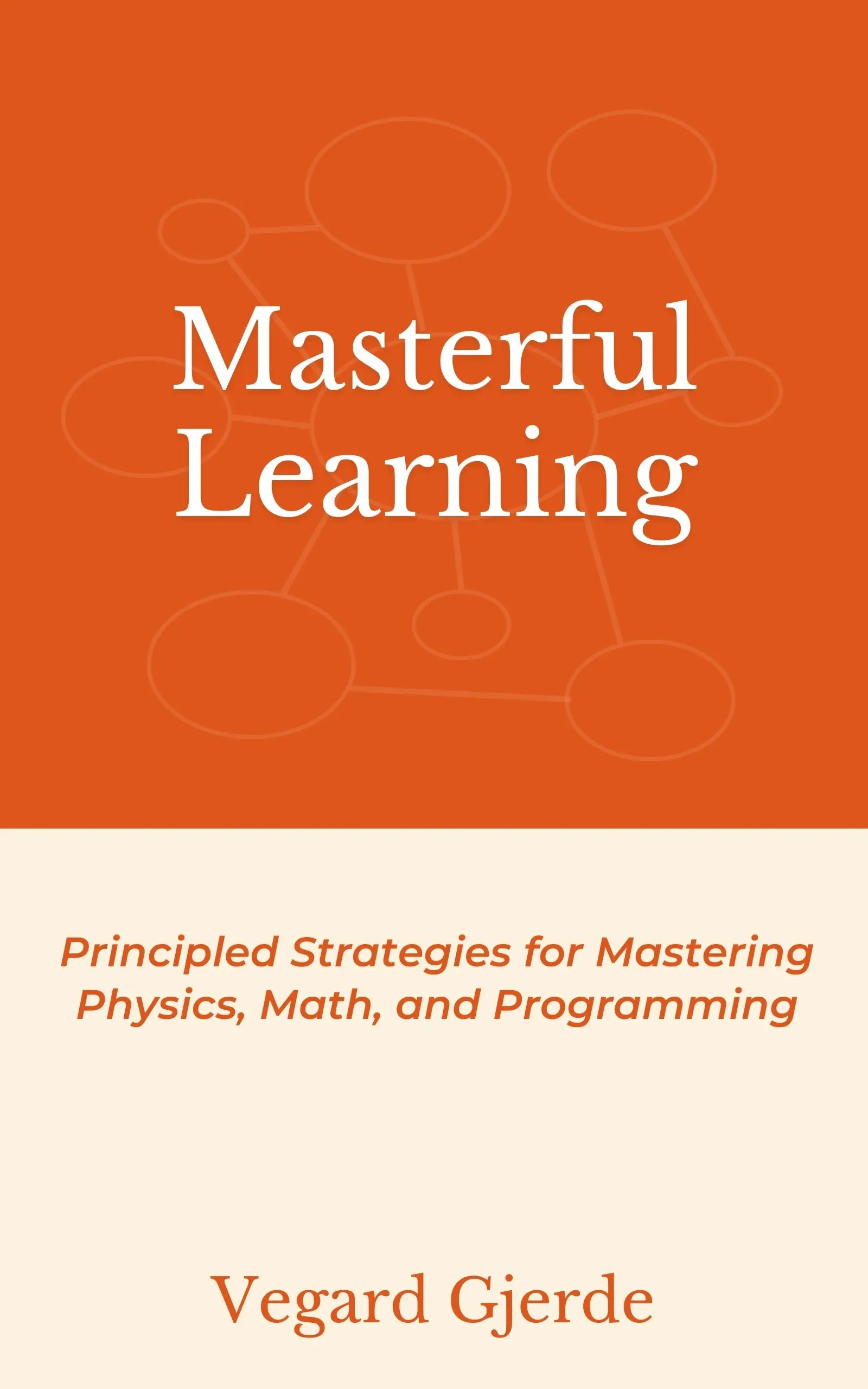
Masterful Learning
The book behind these guides: a study system for physics, math, & programming built on retrieval, connection, explanation, and problem solving.