How to Stay Motivated Studying Math and Physics
Motivation for studying math and physics isn’t something you “find.” It is the output of a system that creates competence, autonomy, and relatedness signals, the core needs emphasized by Self-Determination Theory. In practice, start with a short feedback loop: retrieve one principle, self-explain one worked step, then solve one near-copy problem, so progress becomes visible before you feel inspired.
On this page: Why It Works · Why Math & Physics Feel Demotivating · How to Build It · Advanced Drivers · Common Mistakes · Start Now · FAQ · Related Guides · Unisium · References
Why It Works
Most motivation advice fails because it treats motivation like a personality trait. It’s not. It’s a response to your study environment.
If starting is the bottleneck, fix the cue and first action first (Study Habits), then use a repeatable entry script (From Resistance to Flow).
Self-Determination Theory is blunt about what sustains motivation: you keep going when you feel (1) competent, (2) in control, and (3) connected.
Math and physics are where these needs get attacked daily:
- Competence gets crushed by repeated wrong answers and vague feedback.
- Autonomy gets crushed by backlog, deadlines, and “do these 20 problems” assignments.
- Relatedness gets crushed by silent suffering and the feeling that everyone else “gets it.”
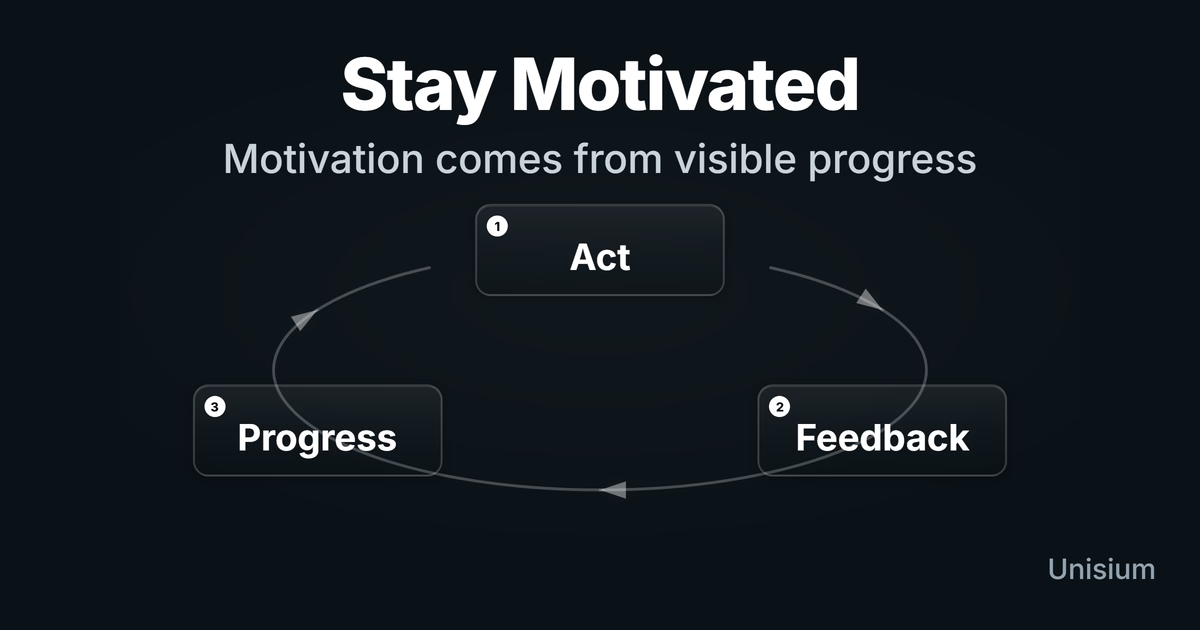
Skeptical take: if you’re waiting to “feel motivated” before you start, you’ve already lost. The reliable path is: do a small action → get clear feedback → feel progress → keep going.
So the goal of this guide is simple: build a system that produces motivation as a byproduct.
Want the complete framework behind this guide? Read Masterful Learning.
Why math and physics feel uniquely demotivating
Math and physics punish you with fast failure:
- You can be “almost right” and still get 0 points.
- Feedback is delayed (solutions arrive later, or not at all).
- It’s easy to confuse “I followed the solution” with “I can do it alone”.
That combo creates a predictable loop: wrong answers → “I’m not good at this” → avoidance. Your job is to break the loop with short cycles of visible progress.
Example loop (15 minutes): retrieve one principle (2 min) → self-explain one worked step (5 min) → solve one near-copy problem (8 min).
If you want this as a repeatable block, use the 10–45–5 protocol.
How to Build Motivation (Step by Step)
Step 1: Fulfill Your Need for Competence
Competence comes from clear feedback and a sense of progress. You need to know exactly what you have mastered and what you still need to learn.
Do this: Engage in activities that give immediate feedback. Use retrieval practice to test your memory of principles. Use self-explanation to ensure you understand every step of a worked example. Don’t stop until you can solve the problem entirely on your own.
Step 2: Fulfill Your Need for Autonomy
Autonomy means feeling that you are the author of your own actions. When you rely on effective strategies, you gain control over the learning process.
Do this: Build a solid routine based on evidence-based methods like spacing and interleaving. When you know how to learn effectively, mandatory assignments feel less like external demands and more like opportunities to apply your skills. You become less dependent on the course structure and more driven by your own mastery goals.
Step 3: Fulfill Your Need for Relatedness
Relatedness is the sense of belonging to a community. Isolation kills motivation, especially when you are stuck on hard problems.
Do this: Stop trying to look smart and start being honest. Admit when you find a topic difficult: “I find this hard, but I’m going to work until I get it.” This honesty invites cooperation. Join study groups, attend lectures, and build an identity based on effort, not innate talent.
Advanced Drivers
Once you have the basics, you can supercharge your motivation with these drivers.
Bring Play and Games
Flow states occur when a challenge matches your skill level. Turn studying into a game. Compete with friends to see who can solve problems the fastest or recall the most equations. For a repeatable entry protocol, see From Resistance to Flow.
Think about the future every day (10 minutes)
Motivation collapses when you stop remembering what you’re building toward. Spend 10 minutes daily imagining the “after”: what you can do when you’re fluent in math/physics, and what options it creates. Direction beats hype.
Build ownership
Don’t treat your degree like something that happens to you. Build something small that uses the skills: a simulator, a solver, a tiny project, a write-up. Ownership turns studying from compliance into investment.
If you want a concrete roadmap for what to build after coursework, see After Studying Math and Physics: Stop Consuming, Build.
Find Your Epic Calling
Connect your daily grind to a larger purpose. Whether it is solving the climate crisis, exploring the universe, or building software that helps people, an “epic calling” gives meaning to the struggle. Your diploma is just a milestone; the skills you are building are tools for your future contribution.
Common Mistakes (and the Fix)
| Mistake | Fix |
|---|---|
| Waiting for motivation | Act first. Commit to 10 minutes. Motivation will kick in once you start making progress. When mood is bad, you need default rules, not inspiration—see Effective Study Mindsets. |
| Faking ease | Embrace the struggle. Don’t pretend it’s easy to look smart. Build an identity around hard work. |
| Isolating yourself | Connect. Struggle is easier when shared. Find peers who value effort over “natural talent.” |
| Focusing on grades only | Focus on mastery. Grades are a byproduct. Aim to understand the material deeply. |
Start Now (10 minutes)
Feeling unmotivated? Try this reflection exercise:
- Visualize (5 min): Close your eyes. Imagine you have reached your long-term goals. What are you doing? How does it feel?
- Identify a Role Model (3 min): Think of someone you admire. What qualities do they have? Visualize yourself possessing those qualities.
- Commit (2 min): Choose one small task—one problem or one page. Do it now.
This daily reflection reconnects you with your “why” and provides the direction you need to push through the “how.”
FAQ
Why do I start strong, then crash mid-semester?
Usually you lose competence signals (you stop feeling progress) and autonomy (your studying becomes reactive: deadlines, panic, backlog). Fix it by shrinking your target to something you can finish daily: one concept, one principle, one problem type. Your brain needs frequent “I’m improving” evidence.
How do I stay motivated when I keep getting problems wrong?
Wrong answers aren’t the issue. Blind wrong answers are. If you can’t tell why you were wrong, competence can’t grow.
Use higher-feedback loops:
- Do 1–2 worked examples with self-explanation, then solve a near-copy problem.
- Use retrieval practice on principles so you stop “blanking” at the start.
- Track a tiny metric: “problems solved independently this week.”
Motivation returns when progress becomes measurable.
I understand in the lecture, but fail alone at home. What’s going on?
You’re confusing recognition with recall. Lectures and reading can feel fluent because the solution is visible. Real competence comes from producing the steps yourself: retrieval, self-explanation, and solo problem solving.
What if I don’t have an “epic calling”?
You don’t need one. You need value plus a workable daily system. Borrow meaning from something smaller: “I want to be the person who can do hard things,” or “I want options.” Epic purpose can grow later, once you’ve built competence.
I’m exhausted. How can I study without willpower?
Don’t negotiate with yourself. Run a tiny default: 10 minutes, same time, same place, same first action. If you feel better after 10 minutes, continue. If not, stop—without guilt. Consistency beats hero days.
How This Fits in Unisium
The Unisium Study System is designed to manufacture the three SDT ingredients:
- Competence: short sessions with clear “did you truly get it?” feedback (retrieval + problem solving).
- Autonomy: you control pace and difficulty instead of relying on last-minute deadlines.
- Relatedness: study with other people. Even one weekly problem session makes effort feel normal.
If you want momentum, do one 10-minute session now: Check access and join the Unisium waitlist.
Related guides
- Guides hub
- Effective study mindsets
- Study habits
- Retrieval practice
- Self-explanation
- Problem solving
References
- Ryan, R. M., & Deci, E. L. (2000). Self-determination theory and the facilitation of intrinsic motivation, social development, and well-being. American Psychologist, 55(1), 68–78.
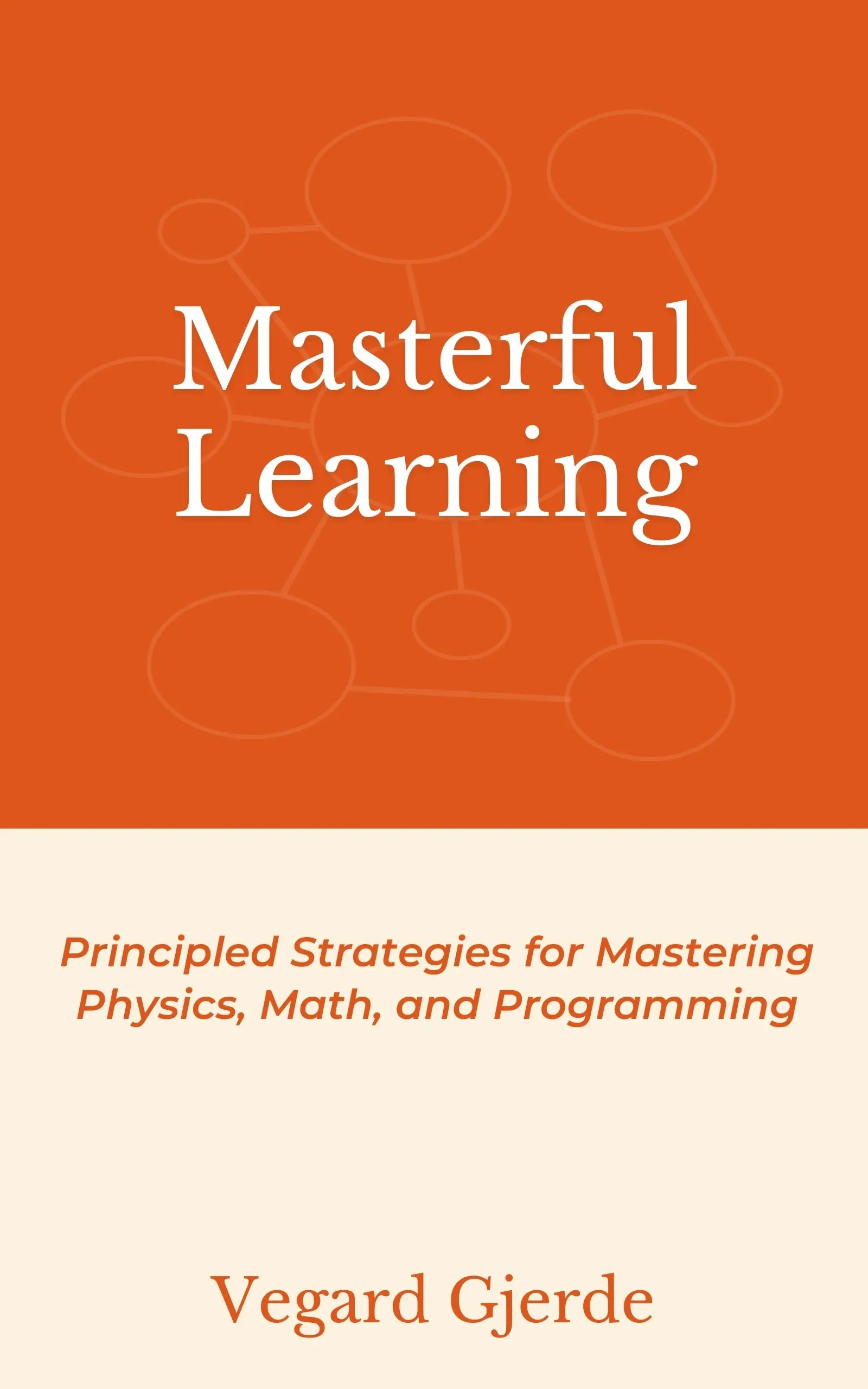
Masterful Learning
The book behind these guides: a study system for physics, math, & programming built on retrieval, connection, explanation, and problem solving.
Ready to apply this strategy?
Unisium turns these evidence-based techniques into guided study sessions for math and physics. Places are limited during early access. Check current availability to start a trial; joining the mailing list is optional.
See plans and availability Read More GuidesAlready have access? Sign in