Are equation sheets effective for math & physics? Sometimes
Equation sheets are summaries of formulas and conditions used for reference during problem solving. When used as a passive lookup table, they weaken retrieval pathways; however, the act of creating a structured sheet is a high-value form of synthesis. In the Unisium Study System, we treat equation sheets as temporary scaffolding—use them to expose missing conditions, then phase them out to ensure exam readiness.
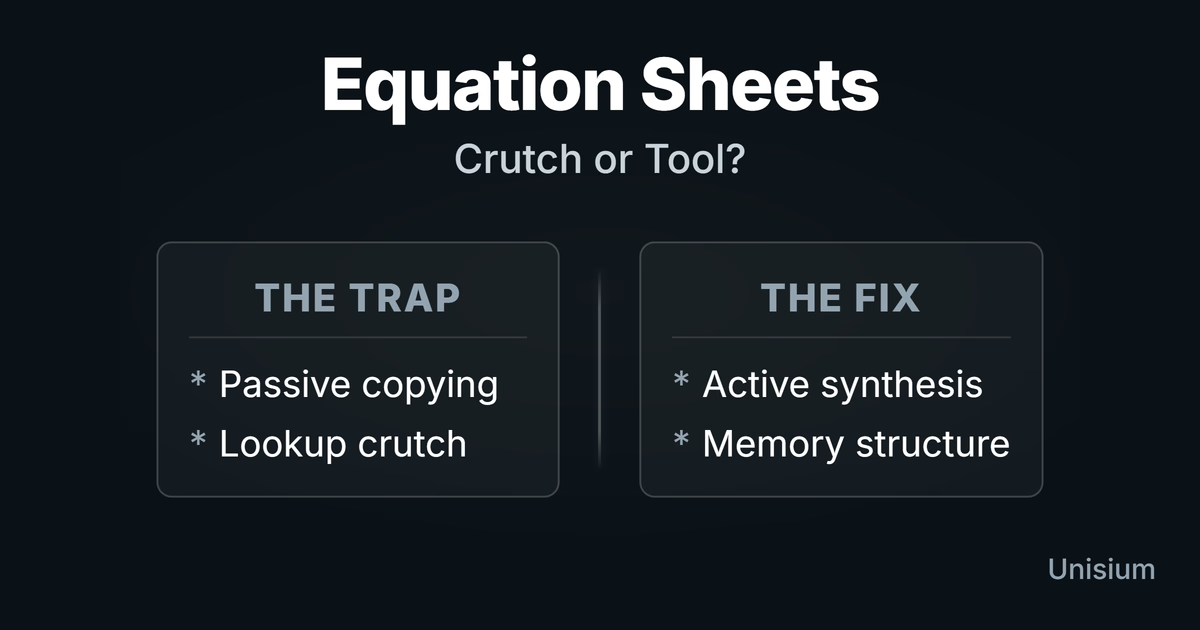
On this page: The Verdict · The Trap · Can It Be Salvaged? · Building a Power Sheet · FAQ · How This Fits
The Verdict
Are equation sheets effective? The answer depends entirely on whether you are the architect or the customer.
If you treat an equation sheet like a menu—a list of options to pick from when you’re stuck—it is actively harmful. It allows you to bypass retrieval practice and creates an illusion of competence. You feel like you can solve the problem, but you are really just matching variables to formulas without understanding the underlying physics.
However, if you act as the architect, the equation sheet becomes a powerful tool for elaborative encoding. The act of creation forces you to make decisions about hierarchy, clustering, and conditions. This deep cognitive processing is the core of Masterful Learning. The sheet itself is almost a byproduct; the learning happens during the construction.
The Trap: The “Menu” Mindset
Many students create equation sheets by scanning their textbook and copying every bolded formula they see. This results in a “formula dump”—a chaotic list of specific-case equations without context.
When you solve problems with a formula dump, you engage in “pattern matching” rather than physics. You look for an equation that has the variables you know (, , ) and the variable you need (), ignoring whether the physical conditions (like constant acceleration) are met.
This creates a dependency loop. You cannot solve problems without the sheet, so you bring it to every study session. When the exam comes (if sheets aren’t allowed), you panic because you never built the neural pathways to retrieve those principles from long-term memory.
Can It Be Salvaged?
Yes, but only if you shift your goal from “having a reference” to “synthesizing a structure.”
Like Summarizing, the value of an equation sheet is in the creation, not the artifact. If you build it from memory, it forces you to organize your knowledge. If you just copy formulas, it’s a waste of time.
An effective equation sheet is not a list of formulas; it is a map of the domain. In practice, the best equation sheet is a compact principle structure: Name, Form, and Conditions arranged in a consistent layout. It groups equations not by chapter, but by physical principle. It explicitly lists the conditions of validity for every formula (e.g., “only valid for constant acceleration” or “only valid for elastic collisions”).
This approach forces you to make decisions. You have to ask: “Is this equation a fundamental law, or is it a derived case?” “Does this apply always, or only sometimes?” Answering these questions builds the deep understanding that is essential for mastery.
Building a “Power Sheet”
Here is the Unisium protocol for creating an equation sheet that strengthens recall under pressure.
1. Start from Memory
Before opening your textbook, take a blank sheet of paper and write down everything you know. Structure it by principle (e.g., “Conservation of Energy”). This acts as a diagnostic retrieval practice session. You will immediately see where your gaps are.
2. Add Conditions, Not Just Math
For every equation you write, you must write the conditions in words next to it.
- Bad:
- Good: (Condition: Constant acceleration only)
If you cannot write the condition, you do not understand the equation.
3. Group by Principle
Don’t list equations linearly. Create clusters around major concepts. For example, group all “Energy” equations together—Work, Kinetic Energy, Potential Energy, Conservation. Draw arrows between them to show how they relate. This spatial organization helps your brain build a principle structure.
4. The “Trash It” Phase
Once the sheet is complete, use it for one or two difficult problems to verify it. Then, put it away. Attempt the next set of problems without it. Every lookup is a missed retrieval attempt; treat the sheet like training wheels—briefly, then less and less.
5. Convert to Retrieval Sheet
Once your structure is solid, create a version with key elements blanked out (Name, Form, or Conditions). Use this as a retrieval sheet to test your recall. The fixed layout becomes a cue, helping you retrieve the right principle under pressure.
The ultimate goal of the power sheet is to render itself obsolete. By the time you have built, refined, and organized it, you should have encoded the material well enough to no longer need it.
FAQ
Should I use the equation sheet provided by my professor?
Use it to check what notation they expect, but do not rely on it for studying. Build your own first. The professor’s sheet is a reference; your sheet is a learning tool.
What if my exam allows a “cheat sheet”?
If you are allowed a cheat sheet, spend your study time optimizing it. Don’t just cram tiny text. Organize it so clearly that you can find what you need in seconds. The act of organizing it is the best study you can do.
How do I know if I’m relying on it too much?
If you feel a spike of anxiety when you try to solve a problem without the sheet, you are relying on it too much. Try the “Hint and Try” method: look at the sheet for a hint, then turn it over and try to proceed from memory.
How This Fits in Unisium
The Unisium Study System is built on the idea of desirable difficulty. We generally discourage reliance on passive reference materials because they make the task too easy in the moment, reducing long-term retention.
However, we strongly encourage synthesis activities. Creating a “Power Sheet” is a form of synthesis. It aligns with our core philosophy: Do not outsource your thinking. If you use a sheet someone else made, you are outsourcing the thinking. If you build it yourself, you are doing the work.
For exam prep, we recommend building a new sheet from scratch once a week. Each time, you will find you can make it more concise as you internalize more of the “derived” cases, eventually leaving only the fundamental principles.
Next Steps
- Do instead: Retrieval Practice
- Big picture: Ineffective Study Techniques
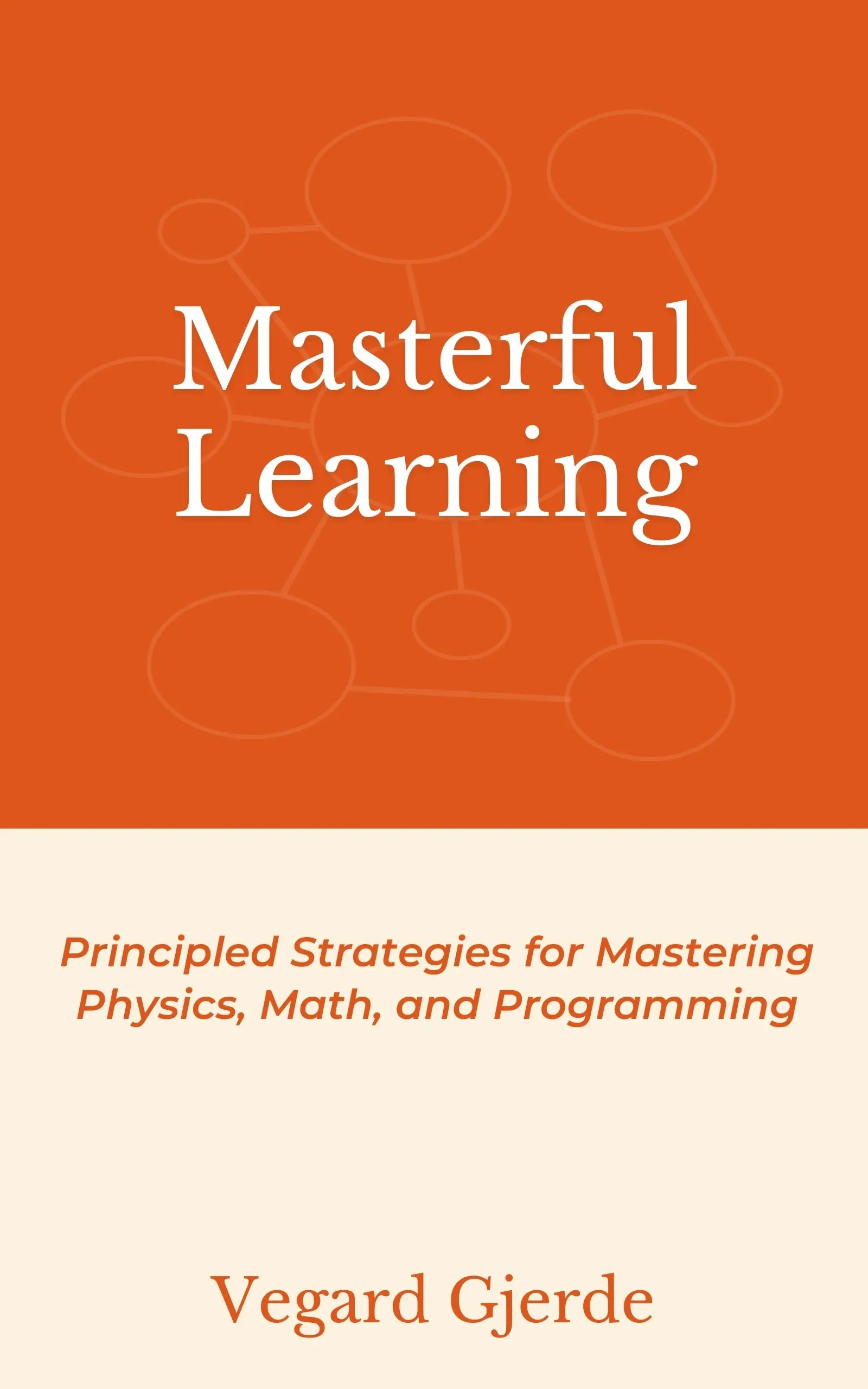
Masterful Learning
The book behind these guides: a study system for physics, math, & programming built on retrieval, connection, explanation, and problem solving.
Ready to apply this strategy?
Unisium turns these evidence-based techniques into guided study sessions for math and physics. Places are limited during early access. Check current availability to start a trial; joining the mailing list is optional.
See plans and availability Read More GuidesAlready have access? Sign in