Is Unisium Right for You?
Unisium is right for you if you want to build real skill in physics and math through active study: connect ideas, practice recall, explain steps, and solve problems. It works best if you’re willing to think, get things wrong, and improve over time.
Unisium is a physics and math learning app for students who want to get seriously good. It is not a homework solver, video library, or passive course. It is a structured practice system for people who want mastery and are willing to do the thinking.
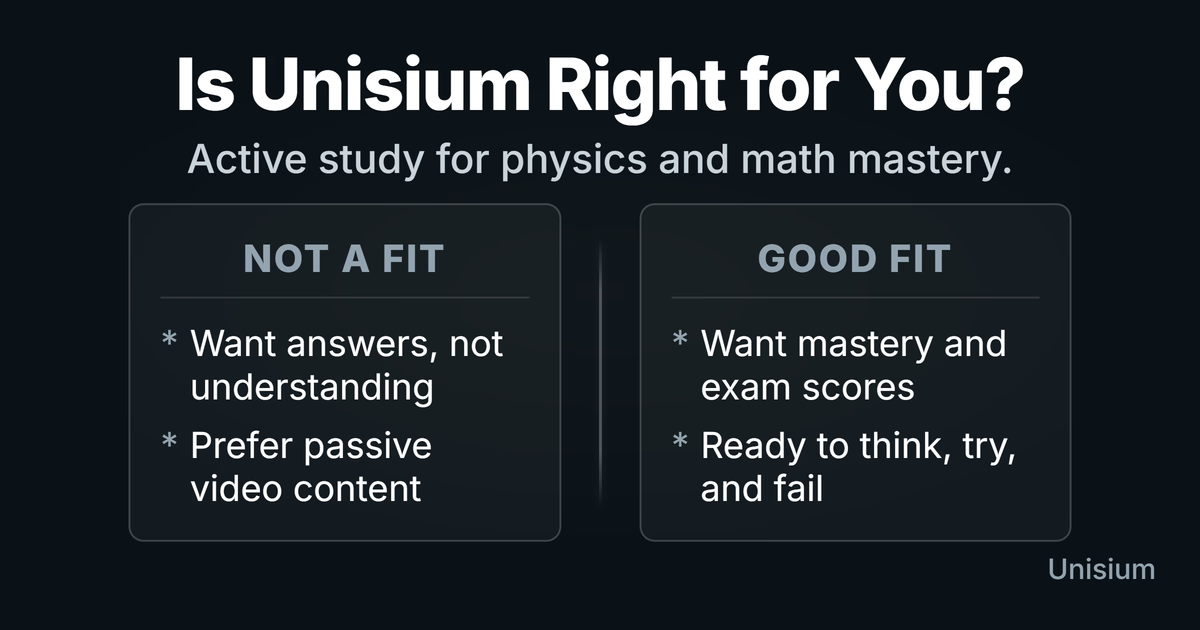
When Unisium Is Not a Good Fit
Unisium is not for you if:
-
You mainly want answers, not understanding.
If the ideal tool for you is “paste in the problem, get a full solution,” you’ll find Unisium frustrating. It will keep asking you to recall, explain, and solve. -
You want passive input or a linear “watch everything” path.
If your default mode is background videos, binge playlists, or “follow 200 lessons and you’re done,” Unisium will feel too demanding. It’s a practice environment, not a video course. -
You need one tool to satisfy all formal course requirements.
Unisium can be your main learning engine, but it can’t replace labs, compulsory sessions, or grading rules. Use it to learn; use your course to meet obligations. (See How to Use Lectures, Workshops, and Other Learning Offers Effectively.) -
You want to outsource thinking to AI.
If your plan is to let AI handle derivations, explanations, and solutions and just skim the output, Unisium will feel like the opposite of what you want. It’s built around the approach in How to Study Physics and Math with AI (Without Letting It Think for You): AI is a tutor and critic—not a replacement for your reasoning. -
You’re not willing to invest consistent effort.
If “I’ll put in real effort over weeks and months to master this” is a non-starter, Unisium will feel like overkill. It’s designed for people who care about getting good, not just scraping through one exam.
None of this is a moral judgment. It’s just a fit issue. There are plenty of tools that give you answers quickly. Unisium is deliberately not one of them.
Who Unisium Is Built For
Unisium is designed around a specific kind of student and a specific kind of goal.
It’s for you if you:
-
Want both mastery and exam performance.
You care about grades and about understanding physics and math well enough to use them later. -
Want to go beyond “just enough for the exam.”
You want to handle unfamiliar problems, connect ideas across topics, and still use the physics and math years later. The key is to regularly test yourself like an exam: recall from memory, explain steps in worked solutions, then solve timed exam-style problems. -
Are prepared to answer questions, think, try, fail, and try again.
You’re willing to be the one doing the retrieval, the explanations, and the problem solving. You’re okay with being wrong on the way to getting it right. -
Are ready to put in real effort.
You know there’s no magic shortcut. You’re prepared to show up regularly and work through elaborative encoding, retrieval, self-explanation, and problem solving. -
Are tired of passive learning that doesn’t transfer.
You’ve watched content and used polished apps—and still felt stuck when you had to solve problems on paper. You want something that changes what you can do under exam conditions. -
Are comfortable not knowing (yet).
You can tolerate that “I don’t get this…yet” feeling and still try. You’d rather expose weaknesses now than discover them in the exam hall. -
Believe you can master the material with enough effort.
You might not feel “good at math/physics” today, but you do believe that with the right system and sustained effort, you can get there. -
Want a flexible environment: whenever, wherever.
You like the idea of short, focused sessions on your laptop or tablet, not being tied to a particular classroom or schedule. -
Enjoy games and progression systems.
Especially if you like RPGs where you get tougher encounters, items of increasing rarity and power, and clear progression—Unisium’s drops, stats, and upcoming collection cards are built for that mindset. -
Want detailed stats and honest feedback.
You want to see clearly where you’re strong, where you’re weak, and how your level is changing—rather than just trusting your feeling. -
Want to know principles and when they apply, not just recipes.
You don’t just want to memorize surface algorithms. You want to know which principle to use, why, and under what conditions. (See Names Have Power for why this vocabulary is not optional.) That’s exactly what the Unisium system targets.
What level is Unisium for?
Unisium is built for serious physics and math learning: from foundations like algebra and functions to university-level physics and mathematics.
You do not have to be a university student to benefit from it. The real requirement is not your current level. It is whether you are willing to study actively and build skill over time.
If you’re in high school and already pushing into harder physics and math, Unisium can give you a huge edge if you’re willing to put in serious, focused hours instead of just dabbling. It’s a way to find out whether you enjoy the kind of thinking physics and math require. If that question is still open, take the math and physics fit assessment before deciding whether Unisium itself is the right system for you.
If you’re at university, Unisium is built to help you move beyond recognition and worked-example familiarity toward exam-ready skill.
If you’re an adult self-learner, Unisium can help you rebuild foundations properly instead of patching gaps randomly. With genuine hard, active work, you can build understanding that goes far beyond patching gaps or memorizing procedures.
If this list sounds like you—or like the kind of student you want to become—Unisium is the app I built for you.
After you know whether this fits
Check whether access is currently open and what beta pricing looks like.
Check current access and pricing
If you want the broader product overview, read What Is Unisium?. If you are comparing Unisium with a self-built flashcard workflow, read Unisium vs Anki. If you want a subject-specific entry point, start with the guide to the best physics study app for active mastery or Best Study App for Calculus.
What Unisium Does (In One Paragraph)
Unisium takes four well-supported strategies—
—and turns them into structured study sessions for physics and math. It tracks your progress, shows you detailed stats, and is gradually layering a light game system on top (drops, progression, and collection cards as they’re introduced) so that effort feels rewarding, not random.
FAQ
Quick FAQ: “Is this for me?”
Is Unisium only for top students?
No. It’s for motivated students, not only “already good” ones. If you’re willing to think and put in effort, Unisium will meet you where you are and push you forward.
Can I use Unisium before university?
Yes. Unisium is built for serious physics and math learning, from foundations like algebra and functions to university-level material. It also works for advanced high school students who are ready to work seriously. If you’re pushing into harder material and want to see whether you enjoy the kind of thinking physics and math require, Unisium is a good test.
Can I use Unisium if I mostly hate studying?
Yes, as long as you’re willing to experiment with a different way of studying: shorter sessions, more active work, and game-like progression. If you want “press play and zone out,” it will not fit.
Do I need to already know the core strategies?
No. The app guides you through them. If you want the theory behind Unisium first, see:
- Elaborative Encoding: Learn Faster with Better Connections
- Retrieval Practice: Make Knowledge Stick (Faster)
- Self-Explanation: Learning from Worked Solutions
- Problem Solving: The Learning Strategy That Turns Knowledge into Skill
- Masterful Learning
How This Fits the Unisium Study System
Unisium is built around one principle: the student has to do the thinking. You answer before seeing, explain steps before moving on, solve before checking, and revisit what matters over time. That is the Unisium Study System in practice: active retrieval, self-explanation, and problem solving inside short sessions so you can build exam-ready skill in physics and math. Next step: check current access and pricing or explore the full framework in Masterful Learning.
Current Access
Unisium is currently in limited beta, and registration may not always be open.
If you read this far and thought “this is how I want to study”, here’s what to do next:
- Join the early-access list: Sign up on the Unisium homepage.
- Check current access and pricing: See the pricing page.
- Read more about the app: Learn more on the About page.
Ready to apply this strategy?
Unisium turns these evidence-based techniques into guided study sessions for math and physics. Places are limited during early access. Check current availability to start a trial; joining the mailing list is optional.
See plans and availability Read More GuidesAlready have access? Sign in