Math Academy vs Unisium: Choose How You Want to Learn
Choose Unisium if you want to work deeply with math and physics principles: explain what they mean, when they apply, why a solution works, and how to solve with them yourself. Math Academy currently offers a broader mathematics curriculum with diagnostic placement and prerequisite remediation. Unisium puts explicit reasoning about each principle at the center of daily practice. The useful choice is which subjects you need and which daily study activities address your difficulties.
Getting an answer right can leave important questions unresolved. Could you explain why that method applies? Would you notice if a condition changed? Could you choose the method on your own next time?
Unisium makes those questions part of your study. Prepared questions, worked solutions, problems, and feedback give you a way to examine an idea from several angles without building the study routine yourself.
This comparison is written by Unisium’s founder, Vegard Gjerde, a physics educator and researcher. The examples below show his actual study attempts.
Which should you choose?
- Choose Unisium if your topics are covered and you want a routine of elaborative encoding, retrieval practice, self-explanation, and independent problem solving.
- Choose Math Academy if your priority is its broader math course sequence or diagnostic placement, particularly for subjects outside Unisium’s current catalog.
- Choose one main system. Both require sustained practice. Give one routine your attention before considering another subscription.
See what going deeper looks like
In this Unisium example, knowing the kinematics equation is only the starting point. The learner must explain the condition that makes it valid and what that condition rules out.
What to notice: the task asks for reasoning in your own words. The feedback responds to that reasoning and identifies a missing qualification. This is the kind of depth Unisium is designed to make part of ordinary practice.
These September 2026 clips show desktop study; the workspace layout has since changed. Vegard uses Wispr Flow, an external dictation tool, to enter text. You can type instead. The recordings demonstrate activities and feedback, not comparative learning outcomes.
Want this kind of practice in your study routine?
Check your subjects and explore Unisium’s 14-day trial. A payment method is required; billing begins after the trial unless you cancel.
See topics, plans and availabilityWhen correct answers still leave gaps
If your current practice feels shallow, identify what is missing. Perhaps you can carry out a calculation but cannot justify its starting equation. Perhaps you recognize a formula but cannot explain its conditions. Those are useful reasons to change how you study, whichever platform you currently use.
The Unisium Study System gives each kind of work its own activity:
| Activity | What you have to produce |
|---|---|
| Elaborative encoding | Explain its meaning, conditions, examples, or connections. |
| Retrieval practice | Recall a principle before revealing and checking it. |
| Self-explanation | Explain how the principles and steps in a worked solution reach the goal. |
| Problem solving | Choose a model, work through the mathematics, and submit your answer. |
The distinction becomes especially clear in a worked solution. Reading the line is easy; explaining why that line belongs there takes more work.
This is an explanation of a supplied solution, not an independent solution attempt. In Unisium’s problem-solving activity, you attempt the problem first and check the final answer afterward. AI feedback on written explanations is separate from final-answer checking. See all four study activities.
What Math Academy does, and where the choice lies
Math Academy also asks students to work. Its documented learning process combines diagnostic placement, worked examples, practice problems, feedback, and quizzes. Its pedagogy includes spaced review and interleaving. Its team has also described adding free-response questions alongside multiple choice.
Unisium’s learning system was developed by Vegard Gjerde, drawing on ten years of research into university students’ learning strategies and exam preparation. It brings elaborative encoding, retrieval practice, self-explanation, and problem solving into a coordinated routine: examine what a principle means and when it applies, recall it, explain its use in a worked solution, and solve with it yourself.
The reason to choose Unisium is the depth of reasoning built into that routine. You explain principles and worked solutions in your own words, then receive feedback on gaps in your reasoning. The examples above show how that goes beyond checking whether a final answer is correct.
Math Academy’s public materials do not establish whether it offers an equivalent dedicated explanation-feedback activity. We have not verified that feature either way. Nor does having a larger catalog establish that one system develops deeper understanding in every topic.
Coverage, practice, and cost
| Decision | Unisium | Math Academy |
|---|---|---|
| Current subjects | Algebra, functions, calculus, differential equations, classical mechanics, and electromagnetism. Coverage varies by topic. | A wider math sequence from school mathematics through university courses, including linear algebra, proofs, statistics, and more. |
| Starting and organizing study | Choose your study scope; prepared activities and adaptive practice organize the work. | Diagnostic placement identifies existing knowledge and prerequisite gaps within a course pathway. |
| Working with a concept | Explain its meaning and conditions, recall it, explain worked solutions, and solve problems. | Worked examples, practice questions, mixed review, and quizzes; response formats include free response and multiple choice. |
| Explanation feedback | AI responds to submitted principle explanations and worked-solution reasoning, as shown above. | An equivalent dedicated activity was not verified in this documentation review. |
| Price | USD 30/month or USD 250/year. | USD 49/month per student advertised on its homepage. |
| Trying it | 14-day free trial with a payment method, subject to availability. | Payment upfront with a 30-day refund policy; its FAQ says there is no free trial. |
Checked October 15, 2026: Unisium topics and terms, Math Academy’s course catalog, advertised price, and billing FAQ. Check the current terms before subscribing.
For physics, compare topics rather than labels. Math Academy now lists Mathematical Methods for the Physical Sciences, covering mathematical tools and physical applications. Unisium offers direct principle practice in mechanics and electromagnetism. Neither label alone guarantees a match to your syllabus. Explore Unisium’s mechanics topics and sample question.
Give one system your study time
Our recommendation is to choose one main platform and use it consistently. You do not need a second subscription simply because it uses different terminology or has more features.
During an evaluation, ask whether you can explain more of your reasoning and make better attempts on your own course problems. In Unisium, use the feedback to revisit an incomplete explanation, then try applying the idea yourself. For exam preparation, keep practising your actual exam formats too. Math Academy likewise recommends exam-specific practice beyond its course work.
Try studying an idea more deeply
Start with a topic you want to understand better. Check coverage, try the study activities, and see whether explaining your reasoning exposes gaps that ordinary answer checking leaves unresolved.
See Unisium’s topics, prices and trial availability. For a fuller fit check, read Is Unisium Right for You?.
FAQ
Is Unisium a Math Academy alternative?
Yes, for learners whose subjects are covered and who want principle-based practice with explicit explanation activities. Check the tasks and coverage before switching. Unisium is designed to be your main study system, not an extra subscription you need alongside Math Academy.
Does Unisium go deeper?
Unisium deliberately asks you to go beyond a final answer: explain what a principle means, when it applies, and why a worked solution uses it. The recordings show that work and its feedback. They let you judge whether it supplies the depth you are missing; they do not prove greater learning gains than Math Academy.
Does Unisium teach from scratch?
Free principle guides explain ideas, conditions, examples, and common mistakes. Prepared study activities help you work with them. You can begin before fully understanding a topic, use explanations when needed, and build through practice. Check that the available material and prerequisites fit your starting point.
Can I get school credit?
Math Academy’s FAQ describes accreditation and transcripts, with school approval needed for credit arrangements. Unisium is a study system; this comparison makes no school-credit claim for it.
Build understanding you can use
If you want to spend your study time examining principles, explaining solutions, and learning to solve independently, that is the work Unisium is built around. You can see the attempts before committing to the system.
For the broader method behind those activities, Masterful Learning develops the study framework beyond any one platform.
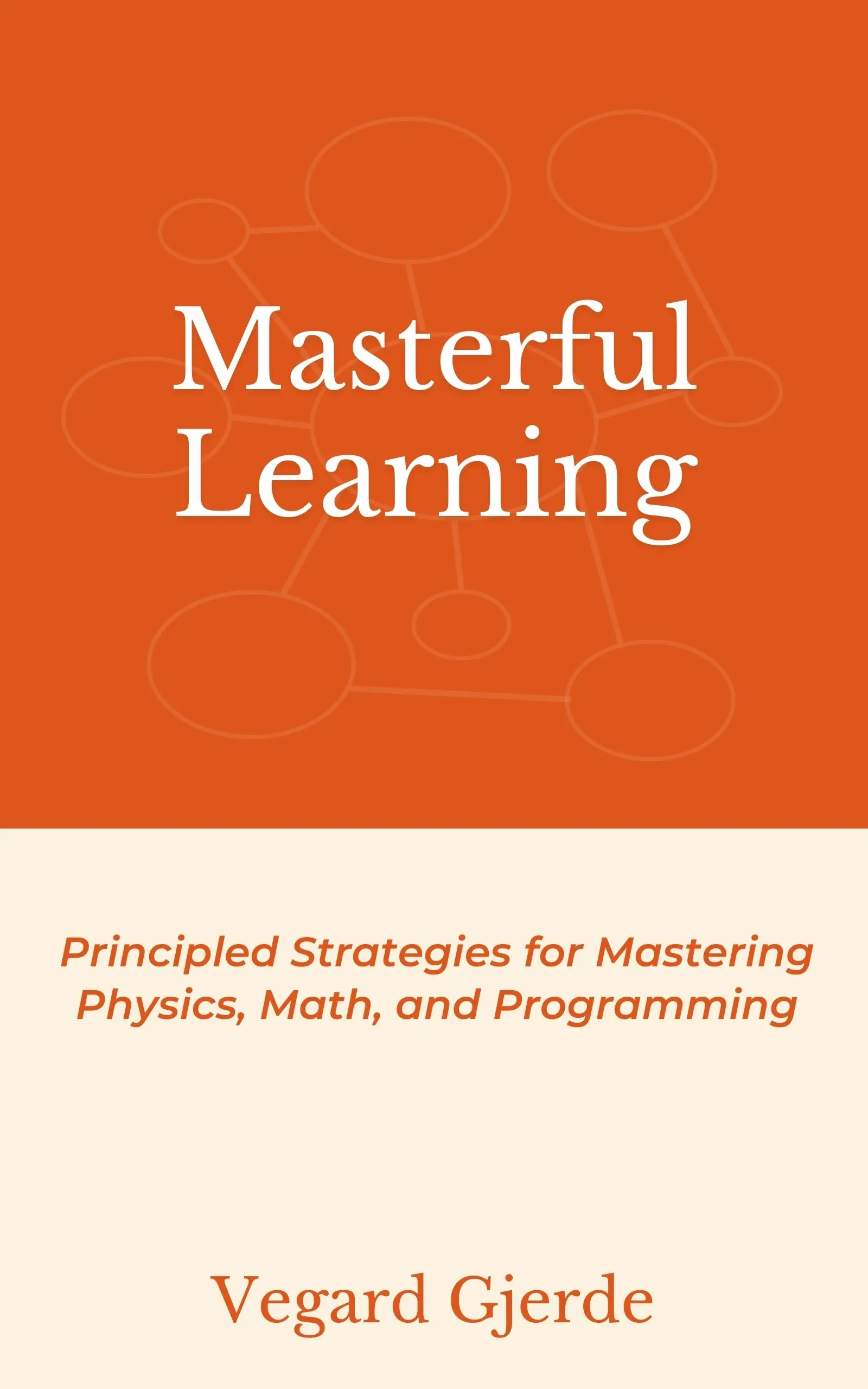
Masterful Learning
The book behind these guides: a study system for physics, math, & programming built on retrieval, connection, explanation, and problem solving.
Ready to apply this strategy?
Unisium turns these evidence-based techniques into guided study sessions for math and physics. Places are limited during early access. Check current availability to start a trial; joining the mailing list is optional.
See plans and availability Read More GuidesAlready have access? Sign in